


Table of Contents
- Why Canadian Brands Are Looking Beyond ShipBob
- What to Evaluate in Canadian 3PL Companies
- Top ShipBob Alternatives for Canadian Brands
- 3PL Comparison Checklist for Your Brand
- Cross-Border Fulfillment and Customs Compliance
- Amazon FBA Preparation Services and Integration
- Making the Switch: Onboarding and Service Transition
- Frequently Asked Questions
Last Updated: October 11, 2026
Why Canadian Brands Are Looking Beyond ShipBob
When you're scaling an e-commerce business in Canada, fulfillment logistics matter more than most founders realize. ShipBob has built a solid reputation for handling US-focused operations, but Canadian brands face a different set of challenges: cross-border complexity, CBSA compliance requirements, and the need for warehouse partners who understand regional nuances.
The real issue isn't that ShipBob is bad. It's that Canadian businesses often need something more specialized. Import compliance, bonded warehouse services, ocean freight coordination, and Amazon FBA preparation require partners embedded in the Canadian logistics ecosystem.
Many Canadian brands are evaluating best shipbob alternatives for canadian brands because they need deeper expertise in CBSA bonded warehousing, container destuffing, and real-time inventory visibility through platforms like Oracle NetSuite.
What to Evaluate in Canadian 3PL Companies
Selecting the right 3PL partner requires looking beyond headline features. The best shipbob alternatives for canadian brands share certain characteristics: they understand your specific business model, maintain warehouse capacity in strategic locations, and integrate with your existing tech stack.
Warehouse Location and Network Coverage
Location isn't just about geography, it's about speed, cost, and compliance. A fulfillment center in Saint-Laurent, Quebec serves the Greater Montreal region and eastern Canada efficiently.
When evaluating warehouse locations, consider your inventory flow. Do you import containers? You need a partner with CBSA bonded warehouse services and container destuffing capabilities. Are you selling to Amazon? Your 3PL should have experience with FBA preparation and be located near major distribution hubs.
The best Canadian 3PL companies maintain transparent information about their service areas, dock capacity, and cross-docking capabilities. Ask potential partners about their geographic coverage and whether they can handle your specific volume during peak seasons.
Integration and Inventory Visibility
Real-time inventory data changes how you operate. When your warehouse management system integrates with your ecommerce platform, you eliminate manual data entry, reduce errors, and make faster decisions about restocking and fulfillment.
Oracle NetSuite and similar enterprise inventory management platforms provide instant visibility into stock levels across fulfillment centers. If your business uses Shopify, WooCommerce, or other ecommerce platforms, ensure your 3PL partner can integrate seamlessly. Poor integrations create bottlenecks and cost you money through delayed orders and manual workarounds.
Ask prospective partners about their integration capabilities. Do they support your specific platforms? How long does implementation take? Who manages the technical setup? These details matter more than you'd expect when you're comparing fulfillment options.
Cross-Border and Customs Expertise
Cross-border fulfillment involves more than just shipping across the border. CBSA compliance, customs documentation, bonded warehouse services, and import number management require specialized knowledge. A partner without deep customs expertise will create delays and expose your business to compliance risks.
The best 3PL partners in Canada have CBSA bonded warehouse credentials and can handle container destuffing, inventory receiving, and customs documentation as part of their core service offering. They understand import processes and can guide you through requirements that vary by product category.
When evaluating cross-border capabilities, ask about their experience with your specific product type. Some categories face stricter scrutiny. A partner familiar with your industry will anticipate issues and prevent costly delays.
Top ShipBob Alternatives for Canadian Brands
The Canadian 3PL market includes several strong alternatives to ShipBob, each with distinct strengths. Below is a comparison of providers that serve Canadian e-commerce brands, subscription businesses, and importers.
GTC Logistics: Domestic Warehouse with CBSA Bonded Services
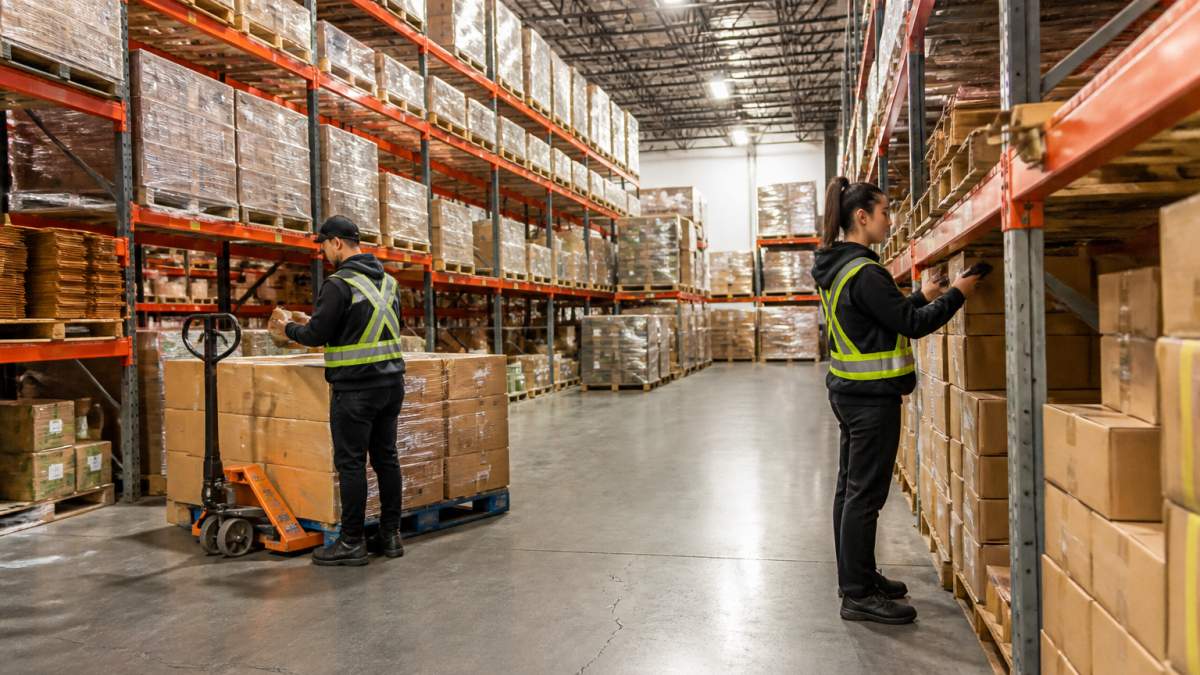
GTC Logistics operates a 30,000 square foot facility in Saint-Laurent, Quebec, with specialized expertise in CBSA bonded warehousing and cross-border fulfillment. This is the best shipbob alternatives for canadian brands option for businesses that import containers, require Amazon FBA preparation, or need real-time inventory integration through Oracle NetSuite.
The facility includes five dock doors for efficient receiving and cross-docking services available until 9:00 PM, which accommodates flexible supply chain schedules. The team handles end-to-end fulfillment, from ocean shipping coordination to order processing and Amazon FBA prep.
Key strengths include CBSA bonded warehouse credentials, instant access to inventory data through NetSuite integration, and assistance with import numbers and record maintenance. The facility is designed for businesses that need more than standard fulfillment, they need partners who understand Canadian regulatory requirements and can simplify complex supply chains.
Pros:
- CBSA bonded warehouse services with container destuffing capabilities
- Oracle NetSuite integration for real-time inventory visibility
- Cross-docking available until 9:00 PM for flexible operations
- One-stop solution for ocean shipping and Amazon FBA preparation
- Simplified freight flow reduces supply chain bottlenecks
Cons:
- Single location (Saint-Laurent, QC) may not serve all regions equally
- Best suited for businesses with regular import activity or multi-channel operations
CanadiEx: Local 3PL for Subscription and E-Commerce
CanadiEx positions itself as a Canadian alternative for subscription businesses and e-commerce brands.
CanadiEx focuses on fulfillment services tailored to subscription models and recurring order patterns.
Pros:
- Canadian-based with focus on local market needs
- Competitive pricing for Canadian subscription businesses
- Fulfillment processes optimized for recurring orders
Cons:
- Limited information on CBSA bonded warehouse services or cross-border capabilities
- May not be ideal for brands requiring complex import handling
ShipHype: Established Network with Shopify Integration
ShipHype operates as a larger 3PL network with established fulfillment centers and strong Shopify integration. For brands using Shopify as their primary ecommerce platform, ShipHype offers seamless connectivity and simplified onboarding.
Pros:
- Strong Shopify integration for connected operations
- Established fulfillment network with multiple locations
- Simplified onboarding process
Cons:
- Limited specific information on Canadian CBSA bonded warehouse services
- May require additional customs brokerage for complex imports
ShipMonk: Large-Scale Fulfillment Platform
ShipMonk operates as a substantial fulfillment platform designed for larger e-commerce operations. The provider is particularly strong for US-focused subscription brands but has expanded into Canadian markets.
Pros:
- Established software platform with advanced features
- Suitable for large-scale fulfillment operations
- Multiple fulfillment center locations
Cons:
- Primarily designed for US-only subscription businesses
- Canadian service coverage and CBSA expertise not clearly documented
ShipHero: Flexible 3PL for Growing Brands
ShipHero positions itself as a flexible 3PL option for e-commerce brands of various sizes. The provider offers 3PL services with emphasis on adaptability and scalability.
Pros:
- Flexible approach to fulfillment services
- Supports multiple sales channels
- Scalable for growing operations
Cons:
- Limited specific information on Canadian warehouse locations
- CBSA bonded warehouse services not clearly documented
3PL Comparison Checklist for Your Brand
Use this checklist to evaluate each 3PL alternative systematically. Not every criterion applies to every business, but this framework ensures you don't overlook critical factors.
| Evaluation Criteria | Key Questions | Priority |
|---|---|---|
| Warehouse Location | Do they operate in regions where you need coverage? Can they serve your customer base efficiently? | High |
| CBSA Compliance | Do they have bonded warehouse credentials? Can they manage customs documentation? | High (if importing) |
| Inventory Integration | Do they integrate with your ecommerce platform and accounting software? How long is implementation? | High |
| Fulfillment Volume | Can they handle your current volume and scale for growth? What are their capacity limits? | High |
| Shipping Carriers | Which carriers do they work with? Can they negotiate rates? | Medium |
| Amazon FBA Services | Do they offer FBA prep? What's their experience with Amazon requirements? | Medium (if selling FBA) |
| Cross-Docking | Do they offer cross-docking services? What are the hours and capacity? | Medium |
| Returns Processing | How do they handle returns and reverse logistics? | Medium |
| Service Transition | How difficult is onboarding? What support do they provide during the switch? | Medium |
| Pricing Model | How do they charge? Per-unit, per-order, or storage-based? Are there setup fees? | High |
Cross-Border Fulfillment and Customs Compliance
Cross-border fulfillment adds complexity that domestic-only 3PLs often can't handle effectively. When your inventory crosses the Canada-US border or you're importing from overseas, you need a partner with deep customs knowledge.
CBSA bonded warehouse services allow you to store imported goods without paying duties until they're released for sale (Trade incentives programs). This is critical for managing cash flow when you're importing containers. Your 3PL partner needs to understand bonded inventory tracking, release procedures, and documentation requirements.
Many Canadian brands encounter customs holds because their 3PL partner didn't prepare documentation correctly or missed specific requirements for their product category. The costs add up quickly: delayed shipments, customer refunds, and staff time spent resolving issues.
A partner with established CBSA relationships and proven compliance processes protects your business. Ask potential partners about their experience with your specific product category and request references from other Canadian importers they've worked with.
Amazon FBA Preparation Services and Integration
If you're selling on Amazon, your fulfillment partner needs to understand FBA requirements. Amazon has specific labeling, packaging, and documentation standards. Non-compliance results in rejected shipments or account warnings.
FBA preparation services include proper labeling, case-packing to Amazon specifications, and shipment documentation. Your 3PL partner should have experience with Amazon's constantly evolving requirements and handle the preparation as a standard service.
Many growing brands use a hybrid approach: fulfilling direct orders through their 3PL partner while using FBA for Amazon sales. This requires a partner comfortable with multi-channel fulfillment and able to manage inventory across both channels without errors.
Ask prospective partners about their Amazon FBA experience and whether they've worked with brands in your category. Request examples of their FBA prep process and ask about their track record with Amazon shipment acceptance rates.
Making the Switch: Onboarding and Service Transition
Switching 3PL providers is operationally complex. You're moving inventory, transferring customer orders to a new system, and relying on a new team during a critical transition period. Poor execution during this phase creates fulfillment delays and customer service issues.
The best partners have structured onboarding processes that minimize disruption. They'll work with you to plan inventory transfers, test system integrations, and establish clear communication protocols before you go live.
Ask potential partners about their onboarding timeline and support model. How many dedicated resources will manage your transition? What happens if issues arise after launch? The answers reveal how seriously they take your success.
Frequently Asked Questions
What should Canadian brands compare when choosing a ShipBob alternative?
Evaluate warehouse location within your market, inventory management software integration with your platform (Shopify, NetSuite), CBSA compliance capabilities for cross-border orders, order fulfillment speed and carrier options, and transparent pricing tied to your order volume. Request references from similar-sized brands and confirm they handle your specific product type and shipping zones.
Are there fulfillment providers with warehouses in Canada?
Yes. Several 3PL companies operate domestic warehouses, including providers based in major distribution hubs. Domestic warehouses reduce shipping times, lower transportation costs, and simplify customs handling for cross-border orders. When evaluating options, confirm the warehouse location aligns with your primary shipping zones and customer base.
How do 3PLs handle cross-border fulfillment and CBSA compliance?
Reputable 3PL providers offer CBSA bonded warehousing, manage import documentation, coordinate with customs brokers, and maintain compliance records. Some operate in-house customs expertise; others partner with brokers. Verify that your chosen provider has documented experience with your product type and can handle the specific regulatory requirements for your shipments.
What Amazon FBA preparation services should I expect from a 3PL?
Quality 3PL providers offer labeling, barcode application, case packing to Amazon specifications, FBA shipment staging, and carrier coordination to Amazon fulfillment centers. Confirm they integrate with your seller account or use compatible inventory management systems to track units in real time and avoid overstocking or stockouts.
What questions should I ask before switching fulfillment providers?
Ask about contract terms and exit clauses, current inventory handling procedures, transition timeline and inventory movement logistics, system integration support and implementation costs, references from brands your size, and how they handle peak volume periods. Clarify pricing structure, hidden fees, and what happens if you need to scale or change service levels.
Switching fulfillment partners requires careful evaluation, but the right choice pays dividends through improved efficiency and compliance. GTC Logistics specializes in serving Canadian e-commerce brands with CBSA bonded warehouse services, real-time inventory integration through Oracle NetSuite, and end-to-end fulfillment including Amazon FBA preparation. Request a rate quote to explore how our specialized services can streamline your supply chain and reduce costs.