



Table of Contents
- What Third Party Logistics Means for Small Ecommerce
- How to Choose a 3PL Provider That Fits Your Business
- 3PL Services for Small Businesses: What You Actually Need
- Understanding 3PL Fulfillment Costs and Fee Structures
- 3PL Inventory Management: Real-Time Visibility and Control
- When Small Businesses Should Switch to a 3PL
- Frequently Asked Questions
Last Updated: October 5, 2026
What Third Party Logistics Means for Small Ecommerce
Third party logistics for small ecommerce means outsourcing your warehouse, inventory, and shipping operations to a specialized provider.
Most small retailers start in a spare room or garage. As volume grows, picking and packing bottleneck, inventory tracking turns error-prone, and shipping consumes time that should go toward growth.
A good third party logistics provider removes those constraints with professional warehouse infrastructure, real-time inventory visibility, and simplified fulfillment, often the inflection point between scaling and stalling.
How to Choose a 3PL Provider That Fits Your Business
A poor fit creates delayed shipments, inventory discrepancies, unexpected fees, or integration nightmares. This checklist is for sellers doing dozens to a few hundred orders a month, not brands shipping thousands.
Start with your real numbers, not your aspirational ones
Before you talk to anyone, write down:
- Your actual monthly order count over the last three months, including the slow months.
- Average order weight and dimensions, including your heaviest SKU.
- How many SKUs you carry, and how many are slow movers.
- Whether you ship domestically, cross-border, or both.
- Whether you need specialized handling: FBA prep, bonded storage for imported goods, kitting, or subscription boxes.
Skipping this and choosing on price alone is a mistake: a cheap but slow provider costs more in lost sales than you save on fees.
Capabilities worth confirming
- Real-time inventory integration: storefront and warehouse should sync automatically; manual updates cause blind spots and overselling.
- Transparent fee structure: ask for a sample invoice at your volume, not a rate card.
- Genuine low-volume suitability: confirm in writing they'll take your current volume, since some minimums quietly exclude sellers under a few hundred orders a month.
- Bonded warehousing (if you import): confirm they handle customs documentation and bonded storage in-house rather than routing you to a broker.
- Platform integration: they should connect cleanly to your storefront, marketplace, or custom system without custom development.
Contract terms, minimums, and exit risk
Before signing, get answers to:
- Term length: month-to-month or fixed? A 12-month commitment at 100 orders a month is a serious obligation if sales dip.
- Volume commitments: is there a minimum order count or storage commitment, and what's the penalty for falling short?
- Onboarding and setup fees: some charge for account setup, integration, or initial receiving.
- Rate-change clauses: can they raise per-order or storage rates mid-term, and with how much notice?
- Inventory removal: if you leave, what does it cost to have stock palletized, packed, and shipped out, and how long do they hold it before disposal?
Microbusiness suitability: when a 3PL is the wrong answer
If you're shipping a few dozen orders a month, a 3PL may not be right yet: minimums, onboarding time, and lost hands-on control often outweigh the convenience. Many sellers keep fulfillment in-house until packing becomes a daily time drain. Some providers do serve very low volumes well, ask for a reference at your size, not a marquee client shipping thousands.
References and a trial
Ask for references from businesses like yours, a provider that excels with high-volume retailers may struggle with your 200-unit-per-month operation. Where possible, start with a limited SKU set or one sales channel before moving your entire catalog, so you can measure accuracy and turnaround first.
3PL Services for Small Businesses: What You Actually Need
Not every 3PL service is relevant to your operation. Knowing which ones move the needle helps you avoid paying for features you won't use.
Order Processing and Fulfillment
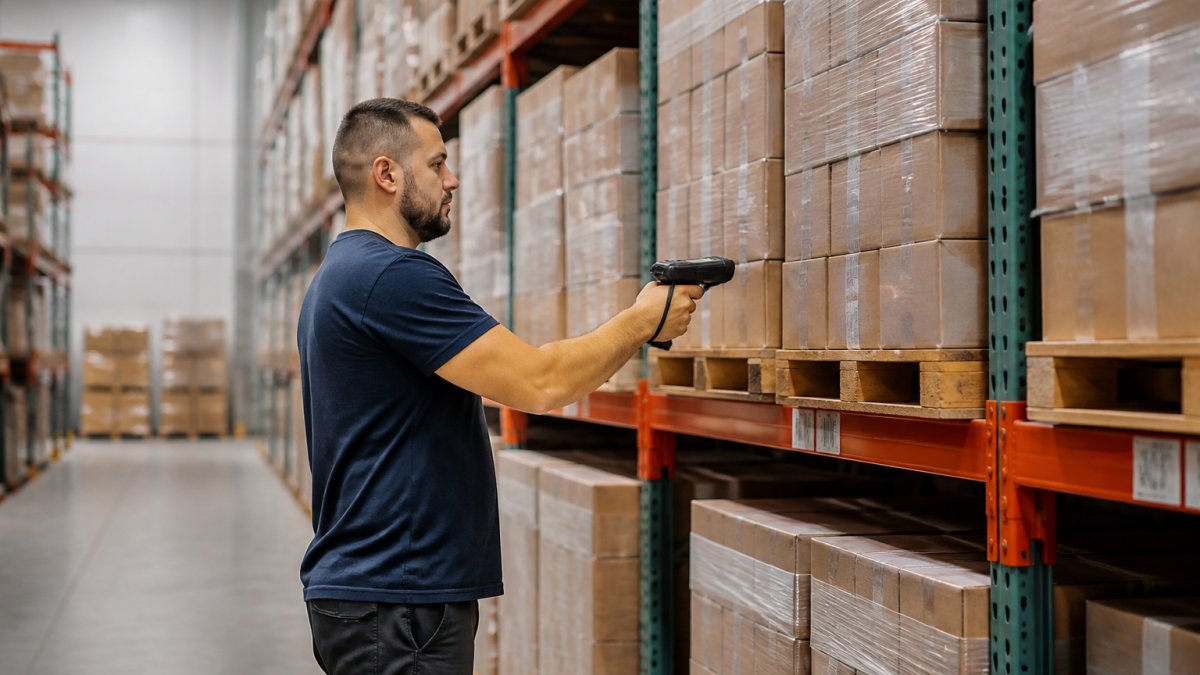
Order fulfillment is the core service: the 3PL receives the order, picks your product, packs it, and ships it to the customer.
Speed impacts satisfaction: most small ecommerce businesses expect fulfillment within 24-48 hours, and a provider that takes a week damages your reputation regardless of price.
Ask about processing timelines explicitly: some providers batch orders and ship once daily, others process continuously.
Warehousing and Inventory Storage
Your products need secure, climate-controlled space, often the first pain point, since a garage or spare room doesn't scale.
A professional warehouse provides secure storage, damage protection, and an organized layout that speeds picking. For importers, bonded warehousing is critical: it lets you store goods before customs clearance, deferring duties until release for sale (Trade incentives programs).
Real-time inventory visibility is essential: log in and see exactly how many units you have. Without it, you'll overstock (tying up capital) or understock (losing sales).
Picking, Packing, and Shipping
These three steps are where most small businesses lose efficiency. Manual picking is slow and error-prone. Incorrect packs damage customer trust. Shipping logistics are complex, comparing carriers, negotiating rates, managing returns.
A 3PL consolidates all three: staff pick products, pack to your standards (branded packaging, inserts), and arrange shipping through negotiated carrier rates, typically cheaper per unit because they aggregate volume across clients.
For Amazon sellers, FBA preparation is a specialized service: receiving, inspecting, labeling to Amazon's standards, and shipping to Amazon's fulfillment centers. Many small brands outsource it.
Understanding 3PL Fulfillment Costs and Fee Structures
Cost is the first question every small business asks, but 3PL pricing varies widely. Most published rate cards assume volume you don't have yet, so the only honest comparison is modeling your own numbers.
The fee categories you'll actually see on an invoice
Most providers charge a combination of the following. Ask for each in writing before you sign:
- Receiving fee: charged per carton, pallet, or unit when your inventory arrives at the warehouse. Often overlooked when sellers calculate landed cost.
- Storage fee: usually billed monthly per pallet position, per bin, or per cubic foot. Long-term storage (often past 90 or 180 days) frequently triggers a higher rate.
- Pick-and-pack fee: a per-order charge covering the pick, the pack, and the label. Some providers split this into a base pick fee plus a per-additional-item fee.
- Postage: the carrier cost, either passed through at cost or marked up. Ask whether you get the provider's negotiated carrier rates or your own.
- Account or platform fee: a flat monthly minimum some providers charge regardless of volume.
A worked example at three volume tiers
Rates are negotiated, so treat these as illustrative ranges, not quotes. The point is the shape of the cost curve.
| Monthly orders | Typical per-order pick-and-pack | Typical storage | Typical account minimum |
|---|---|---|---|
| 50-150 | Higher per unit; minimums often apply | Small footprint, bin storage | Often the binding constraint |
| 300-600 | Mid-range; volume tiers start | 1-3 pallet positions | Usually waived |
| 1,000+ | Lowest per unit; committed rates | Multiple pallets, negotiated | Waived, sometimes with rebates |
At low volume, the account minimum, not the per-order fee, determines your real cost. A low pick-and-pack rate with a monthly minimum can cost more at 80 orders than a higher per-order rate with no minimum.
Break-even: in-house versus a 3PL
Run this before requesting a single quote. Add up, for one month:
- Labor: hours spent picking, packing, and dropping off shipments, multiplied by what your time is worth (or what you pay a helper).
- Space: rent or the opportunity cost of the room your inventory occupies.
- Packaging and supplies: boxes, mailers, tape, labels, inserts.
- Shipping: what you pay carriers today, at retail or small-business rates.
- Software: inventory or shipping tools you pay for separately.
- Errors and reships: the cost of mispicks, lost packages, and replacements.
Then compare against the 3PL's all-in monthly quote, pick-and-pack, storage, postage, minimums, and expected surcharges. Break-even is where the 3PL column drops below in-house. For many sellers it lands between a few hundred and several hundred orders per month, but it's highly sensitive to how you value your own time, evenings spent packing have a real cost even if it never appears on a bank statement.
Questions that surface hidden costs
- Is there a monthly minimum, and what happens if I fall below it?
- Is postage passed through at cost, or marked up?
- What triggers a long-term storage surcharge, and at what day count?
- Are returns billed per unit, and is disposal billed separately?
- What are the onboarding and integration fees, if any?
Outsourcing often reduces total costs versus in-house, but only when the provider's minimums and surcharges align with your actual volume. A provider built for 5,000-order-per-month brands is almost always the wrong financial fit for a seller doing 100.
3PL Inventory Management: Real-Time Visibility and Control
Inventory accuracy is where most small businesses struggle.
That visibility drives better decisions: you know which products move fast, reorder with confidence, and avoid the cash drain of overstocking slow movers.
Integration with your ecommerce platform is critical.
Some providers offer advanced features like demand forecasting or automated reorder points. These aren't essential at the start but become valuable as you grow.
When Small Businesses Should Switch to a 3PL
The decision to outsource fulfillment isn't binary. It depends on your specific situation and growth trajectory.
Consider switching to a 3PL when:
- You're processing 200+ orders monthly: Below this, the overhead of setting up and managing a 3PL relationship may exceed the benefits. Above this, manual fulfillment becomes a significant time drain.
- You're importing products: If you're bringing in containers from overseas, bonded warehousing and customs compliance become complex. A provider experienced in this eliminates major headaches.
- You're selling on multiple channels: Managing inventory across your own store, Amazon, and other platforms is exponentially harder without centralized fulfillment.
- You're losing sales due to fulfillment speed: If customers are leaving because you take too long to ship, outsourcing to a faster provider directly impacts revenue.
- You're spending significant time on logistics: If you or your team spend more than 10 hours weekly on picking, packing, and shipping, outsourcing likely pays for itself.
Break-even varies: some find it at 150 orders monthly, others not until 500.
One common objection is loss of control. That's valid if you choose poorly, but a reliable provider actually gives you more control: real-time data, faster fulfillment, fewer errors.
Choosing a third party logistics provider is one of the most impactful decisions a growing ecommerce business makes.
At GTC Logistics, our 30,000 square foot facility, Oracle NetSuite integration, and specialized services like CBSA bonded warehousing and Amazon FBA preparation are built specifically for businesses moving beyond garage-based operations. If you're ready to professionalize your fulfillment, we can help you evaluate whether outsourcing makes sense for your operation. Request a rate quote to see how our services compare to your current setup.
Frequently Asked Questions
What is ecommerce third-party logistics and how does it work?
Third party logistics (3PL) is an outsourced service that manages warehousing, inventory, order fulfillment, and shipping for ecommerce businesses. Instead of handling these operations in-house, you partner with a 3PL provider who stores your products, picks and packs orders, and arranges delivery to customers. A 3PL integrates with your sales channels (Shopify, Amazon, etc.) to receive orders in real time, process them efficiently, and provide tracking updates to your customers.
How much does third-party logistics cost for a small ecommerce business?
3PL pricing depends on several factors: order volume, storage space needed, weight of items, shipping distance, and service complexity (e.g., Amazon FBA prep, customs compliance). Costs typically include monthly storage fees, per-order fulfillment charges, and shipping rates. Pricing varies significantly between providers and geographies. Contact a 3PL directly for a custom quote based on your specific order volume and inventory size.
When should a small ecommerce business use a 3PL?
Consider a 3PL when you're spending significant time managing inventory, packing orders, or arranging shipping; when you've outgrown your home office or garage storage; when you need to serve customers across multiple regions; or when you're scaling to Amazon FBA and need professional prep and compliance. A 3PL becomes cost-effective when your order volume reaches 100-200+ orders per month or when your inventory needs dedicated, secure space.
What services should a small business look for in a 3PL?
Prioritize: real-time inventory visibility (ideally via integrated software), reliable order fulfillment with low error rates, scalable storage that grows with your business, transparent fee structures with no hidden charges, and compliance expertise if you import goods or sell on Amazon FBA. For international shipments, confirm the 3PL handles customs documentation and bonded warehousing. Ask for references from businesses similar to yours in size and industry.


