



Quick Summary
Customs delays usually happen because of small gaps in paperwork, classification, or payment, not one big mistake. Avoid them by matching every document field, classifying goods precisely, and arranging duties before arrival. Respond to any hold quickly with complete documents.
- Make invoice, packing list, and transport document fields match exactly.
- Describe goods specifically enough to classify them under the correct tariff code.
- Decide who pays duties and taxes, and arrange payment before the shipment arrives.
- Respond to a held shipment in writing, with the full requested set in one reply.
- Track days to release and documentation requests to find recurring problems.
Table of Contents
- Why Imported Goods Get Held at the Border
- Step 1: Build an Import Documentation Checklist
- Step 2: Classify Your Goods and Declare Accurate Values
- Step 3: Understand the CBSA Import Release Process
- Step 4: Decide Whether Bonded Warehouse Storage Fits Your Shipments
- Step 5: Plan Duties, Taxes, and Payment Before Arrival
- Step 6: Respond Quickly When a Shipment Is Held
- Step 7: Keep Records and Review Each Shipment
- Book Your Next Shipment With a Compliance Check
- Frequently Asked Questions
7 Steps to Avoid Customs Delays on Imported Goods
Last Updated: November 1, 2026
Why Imported Goods Get Held at the Border
Customs delays rarely come from one big mistake. They usually come from small gaps in paperwork, classification, or payment that make a shipment hard to release. The Canada Border Services Agency (CBSA) reviews every commercial import, and when information does not match, the shipment waits.
At GTC Logistics, we see the same causes again and again. A commercial invoice lists a different value than the bill of lading. A product description is too vague to classify. A duty payment is not arranged before arrival. Each one can pull a container out of the normal flow.
The good news is that most holds are preventable. The seven steps below walk through what to check before, during, and after arrival, so your next shipment clears faster. CBSA guidance on importing commercial goods into Canada
Step 1: Build an Import Documentation Checklist
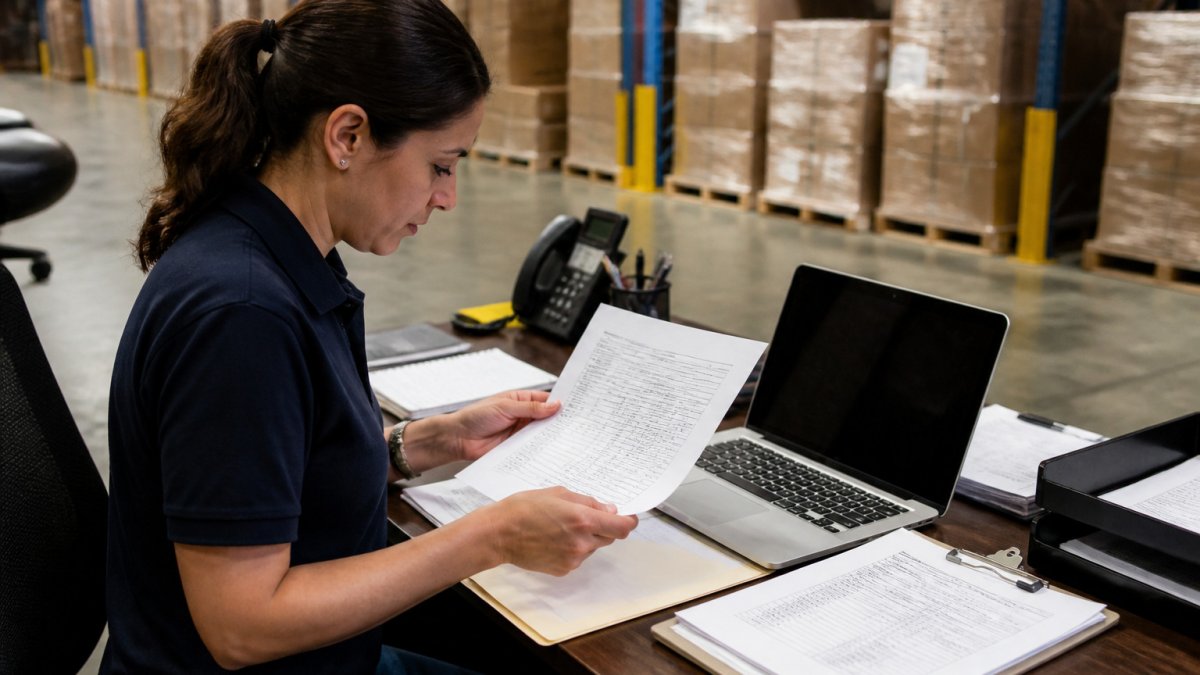
Start with the paperwork. Clean documents are the fastest way to avoid a customs hold, and a written checklist keeps every shipment consistent. The goal is not just to have the right documents, it is to make sure every field on every document tells the same story.
Core document set
Your core file should include:
- Commercial invoice showing the seller, buyer, goods, quantities, and price
- Packing list matching the invoice line by line
- Bill of lading or air waybill with matching shipper and consignee details
- Certificates or permits for any regulated product
- Importer of record details, including your business number and any importer registration number your broker uses
Field-by-field checklist
Before dispatch, confirm each of these fields is present and consistent across the commercial invoice, packing list, and transport document:
| Field | What to verify |
|---|---|
| Shipper name and address | Matches the bill of lading and packing list exactly |
| Consignee name and address | Matches the importer of record and delivery address |
| Invoice number and date | Present on invoice and referenced on packing list |
| Country of origin | Stated per line item, not just per shipment |
| Description of goods | Specific enough to classify (see Step 2) |
| Quantity and unit of measure | Same unit on invoice and packing list |
| Gross and net weight | Matches the transport document |
| Unit value and extended value | Arithmetic checks out; currency stated |
| Incoterms | Stated (e.g., FOB, CIF, DDP) and consistent with who pays freight and duty |
| HS code | Present per line item if your broker requires it |
Sample invoice line that survives review
A weak line reads: "Kitchen items, 200 pcs, $1,000." A strong line reads: "Stainless steel kitchen tongs, 25 cm, model TK-25, 200 pcs, unit value CAD 5.00, extended value CAD 1,000.00, country of origin: Vietnam, HS 8205.51." The strong line gives the classifier a description, a model number, a unit value, an origin, and a code candidate. That is the level of detail that keeps a shipment moving.
Common mismatch patterns
Watch for these recurring errors:
- Invoice quantity in pieces but packing list quantity in cartons, with no conversion stated
- Consignee on the bill of lading is a freight forwarder, but the invoice names the buyer, the importer of record must be clear
- Country of origin shown only at the shipment level when line items come from different countries
- Incoterms on the invoice conflict with the freight terms on the transport document
- Weights rounded differently on each document
Step 2: Classify Your Goods and Declare Accurate Values
Every product needs the correct tariff classification code. Classification decides the duty rate, any trade-agreement treatment, and whether the goods face extra requirements.
Describe each product in plain, specific terms. "Stainless steel kitchen tongs, 25 cm" is far easier to classify than "kitchen item." Use the official Canadian Customs Tariff to confirm your code, and keep a record of how you chose it.
Declared value matters just as much. Declare the transaction value you actually paid or will pay, and make sure it matches your invoice. Mismatched values are a frequent trigger for review.
Step 3: Understand the CBSA Import Release Process
Knowing how the release process works helps you plan. Carriers and brokers submit cargo information before arrival, and CBSA uses that data to decide whether a shipment needs a closer look.
Most shipments clear without a physical inspection. Some are selected for examination, which adds time. Filing accurate advance information gives your shipment the best chance of a quick release.
Ask your carrier or customs broker to confirm which filings are required for your mode of transport before the goods leave the origin port.
Step 4: Decide Whether Bonded Warehouse Storage Fits Your Shipments
A bonded warehouse lets you store imported goods before paying duties and taxes. This can help when cash flow is tight or when you need time to sell or move goods. It can also reduce pressure at the port if you cannot take delivery right away.
Bonded storage is not the right answer for every importer. It adds steps and requires careful inventory tracking. Compare it against your typical order cycle and cash needs before you commit. Operators must meet licensing and security conditions set by CBSA, so confirm current requirements with the facility you choose. CBSA information on bonded warehouses
Step 5: Plan Duties, Taxes, and Payment Before Arrival
Unpaid duties and taxes are a common cause of release delays. Decide early who will pay them and how.
Your options usually include:
- Paying duties and taxes yourself through your customs broker before release
- Using a Delivered Duty Paid (DDP) arrangement, where the seller covers duties
- Deferring duties through a bonded facility or an eligible account
Confirm the amount with your broker before the shipment arrives. Surprises at the border slow everything down.
Step 6: Respond Quickly When a Shipment Is Held
Even well-prepared shipments sometimes get held. Your response in the first few days shapes how long the hold lasts and how much storage or demurrage you accrue. Treat an active hold as a workflow, not a phone call.
Decision tree for an active hold
1. Confirm the hold type. Ask your broker or carrier to identify whether the hold is a CBSA examination, a documentation request, a payment issue, or a carrier-side hold (for example, freight not paid or a release not issued). The response path differs for each.
2. Identify the right first contact.
- CBSA examination or documentation request: your licensed customs broker is the primary contact. They can see the reason code and respond on your behalf.
- Payment or duty issue: your broker and your finance contact, together, to confirm whether duties and taxes were remitted and whether a bond or deferral account applies.
- Carrier-side hold: the carrier's import desk, not CBSA. Confirm release status and any freight or terminal charges.
- Missing permit or product compliance issue: the relevant regulator or your compliance team, in parallel with the broker.
3. Request the specific information needed. Do not ask "what's wrong?" Ask for the reason code, the list of documents or fields requested, and the deadline for response. Write the request and the reply down.
4. Respond in writing, completely. Send the full requested set in one response where possible. Partial responses restart the clock.
5. Escalate on a schedule. If there is no movement within the response window your broker confirms, escalate to the broker's management or the carrier's import desk. Keep a dated log of every contact.
6. Decide on storage and delivery. If the hold will run past your free time at the terminal, ask your broker whether a bonded facility or alternate arrangement reduces exposure. Do not let storage charges accumulate while waiting for a routine document.
What to have ready before you ever need it
- Your broker's after-hours contact and escalation path
- A named internal owner for customs holds
- A folder per shipment with the full document set, so you can resend in minutes
- A record of who pays duties and taxes on each shipment type
Speed matters, but accuracy matters more. A fast, incomplete response creates a second round of questions.
Step 7: Keep Records and Review Each Shipment
Every clearance teaches you something. After each shipment, note any delays, questions, or fees, and identify the cause.
Track these simple measures over time:
- Days from arrival to release
- Number of documentation requests per shipment
- Storage or demurrage charges incurred
- Errors found during review
Patterns show where to improve. If one supplier's invoices keep causing questions, fix that supplier's paperwork template first.
Book Your Next Shipment With a Compliance Check
Customs delays are easier to prevent than to fix. Start with a clean document set, accurate classification, and payment arranged before arrival. Use the checklist above on every shipment.
If you want a second set of eyes on your next import, GTC Logistics can review your documentation and plan your release. Request a rate quote from our team to get started. Canada Revenue Agency guidance on importing goods
Frequently Asked Questions
Why do packages get stuck in customs?
Most holds come from incomplete or inconsistent paperwork, such as a commercial invoice that does not match the packing list, a product description too vague for the officer to assess, or a declared value that looks inaccurate. Goods can also be selected for review at random or because the shipment carries a risk flag. Checking that every document agrees on quantities, values, origin and descriptions before dispatch removes the most common triggers and gives you a clean file if an officer asks questions.
How can importers avoid customs delays?
Start with accurate documentation: a complete commercial invoice, a detailed packing list, correct HS classification and a clear product description. Confirm duty and tax payment arrangements in advance, and make sure your broker or carrier has the consignee and importer details they need. Arranging these items before the shipment leaves the origin port prevents most avoidable holds and shortens the time goods spend waiting at the border.
Can incorrect tariff classification delay an import shipment?
Yes. If the classification code on your paperwork does not match what the goods actually are, the CBSA may query the entry, request more information or adjust the duties owed. Review the tariff classification for each product before shipping, compare it against the product description and keep the reasoning on file. If you are unsure which code applies, ask a licensed customs broker to confirm it before the goods arrive.
What should I do if an import shipment is held for more information?
Respond as quickly as possible with the documents the CBSA or your broker requests, and make sure the information matches your original filing. Keep a record of every request and every response. If the hold continues, contact your carrier or customs broker for an update on the file status. Prepared documentation and an organized response process typically resolve holds faster than delays in gathering what was asked for.


