



Table of Contents
- What Cross Docking Services Actually Do for Small Businesses
- Cross Docking vs. Traditional Warehousing: Cost and Speed Comparison
- Container Destuffing Services: Where Cross-Docking Starts
- CBSA Bonded Warehousing Benefits for Importers Who Cross-Dock
- Amazon FBA Preparation Services and Cross-Docking: A Practical Workflow
- What Cross Docking Costs Small Businesses (and What Drives the Fee)
- Choosing a Cross-Docking Partner: Questions to Ask Before You Commit
- Conclusion: When Cross-Docking Makes Sense for Your Operation
- Frequently Asked Questions
Last Updated: September 22, 2026
What Cross Docking Services Actually Do for Small Businesses
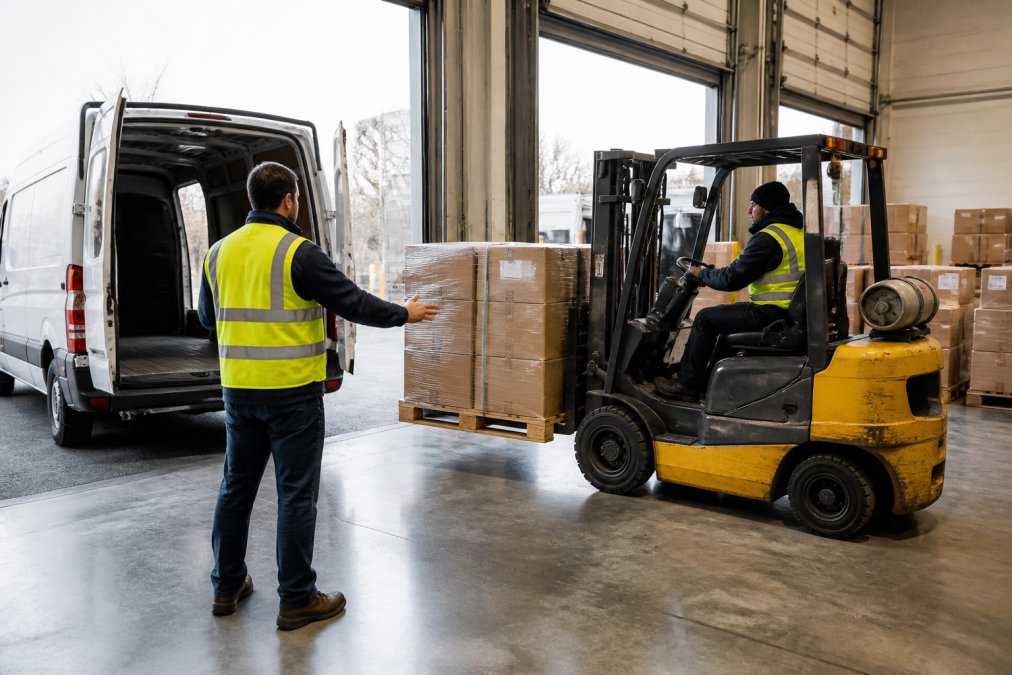
Cross docking services move freight directly from inbound trucks to outbound vehicles with little or no storage time in between. For a small business, that means goods clear the dock and keep moving instead of sitting on a shelf while storage fees quietly add up. This guide from GTC Logistics breaks down how cross-docking works, where it saves money, and how to choose a partner without getting burned.
How a Cross-Dock Move Works, Step by Step
The process is short and repeatable:
- Inbound freight arrives by truck or container and gets checked against the manifest.
- Workers sort and label each shipment by its final destination.
- Goods move straight to the outbound dock, often within hours.
- Outbound carriers load and depart, sometimes the same day.
That's it. The whole point is minimizing the middle step where inventory sits idle.
Cross Docking vs. Traditional Warehousing: Cost and Speed Comparison
Traditional warehousing stores inventory; cross-docking routes it. The trade-off comes down to speed versus buffer. Storage gives you a cushion when demand spikes, but you pay for that cushion every month in rent, handling, and slower turns.
| Factor | Cross-Docking | Traditional Warehousing |
|---|---|---|
| Storage time | Hours | Weeks to months |
| Storage overhead | Minimal | Ongoing monthly cost |
| Handling touches | Fewer | Multiple |
| Lead time | Shorter | Longer |
| Best for | Predictable, fast-moving goods | Buffer stock and slow movers |
Container Destuffing Services: Where Cross-Docking Starts
Container destuffing services are the first step of most cross-dock moves. When an ocean container arrives, workers unload it, count and inspect the contents, then stage each shipment for its next leg.
CBSA Bonded Warehousing Benefits for Importers Who Cross-Dock
CBSA bonded warehousing benefits importers by letting goods be stored before duties and taxes are paid. The Canada Border Services Agency oversees bonded facilities, and the Canada Border Services Agency guidance on bonded warehouses sets out how these warehouses operate.
Amazon FBA Preparation Services and Cross-Docking: A Practical Workflow
Amazon FBA preparation services get inventory marketplace-ready: labeling, poly-bagging, bundling, and carton prep to Amazon's specs. Cross-docking and FBA prep fit together neatly because both reward speed and accuracy.
Here's the workflow that works:
- Container arrives and gets destuffed.
- Goods are inspected and counted against the manifest.
- Items are prepped to Amazon's requirements.
- Prepared cartons move straight to the outbound dock.
- Freight ships to the fulfillment network without a storage detour.
What Cross Docking Costs Small Businesses (and What Drives the Fee)
Pricing for cross docking services depends on quantity, timing, and how much handling each shipment needs. There's no single rate card, and any provider quoting a flat number without asking about your freight is guessing.
What drives the fee:
- Volume and weight of each shipment
- Number of handling touches required
- Whether prep, labeling, or kitting is involved
- How long goods sit before the outbound truck leaves
- Time-sensitive or after-hours scheduling
A Break-Even Framework for Micro-Businesses
Most guides assume you're moving pallets by the dozen. If you're shipping a handful of pallets a month, the math is different, and the decision usually comes down to one comparison: what you pay per pallet for cross-docking versus what you pay per pallet for storage plus the carrying costs of slower turns.
Run the numbers in this order:
- Count your monthly pallet volume. Be honest about peak weeks, not just the average.
- Get a per-pallet cross-dock quote. Ask whether the rate includes destuffing, sorting, labeling, and outbound loading, or whether those are line items.
- Get a per-pallet storage quote for the same freight, including inbound handling, monthly rack rent, and outbound handling.
- Add your carrying costs. Storage ties up cash in inventory, and that cash has a cost. Even a modest carrying cost per month can flip the comparison once goods sit for more than a few weeks.
- Compare the totals. Cross-docking wins when your per-pallet cross-dock rate is lower than storage plus carrying cost. Storage wins when your demand is unpredictable enough that you'd otherwise pay expedited freight to cover a stockout.
What to Ask For in a Quote
Ask for a quote broken out by line item, not a single blended number. You want to see:
- Inbound handling per pallet or per container
- Sorting and labeling per unit or per pallet
- Outbound loading per pallet
- Any dwell-time charge if goods sit past a stated cutoff
- After-hours or weekend surcharges
Where the Savings Actually Come From
The honest answer is that cross-docking usually costs less than warehousing for the same volume, because you're not paying for storage. But the savings depend on your shipping patterns. If your freight arrives in a steady rhythm and moves out within a day or two, you're capturing the full benefit. If it arrives in bursts and sits waiting for outbound capacity, you're paying cross-dock rates for warehousing behavior.
Choosing a Cross-Docking Partner: Questions to Ask Before You Commit
The right partner makes cross-docking feel invisible. The wrong one turns every shipment into a fire drill. Before you commit, ask:
- How many dock doors do you have, and what's your throughput at peak?
- Do you handle CBSA documentation end-to-end, or do I still need a customs broker?
- What's your latest inbound cutoff, and do you run after-hours?
- How do you track inventory, and can I see it in real time?
- Can you scale with us if volume doubles?
Risk, Liability, and What Happens When Something Goes Wrong
This is the part most guides skip. Cross-docking shortens the window when goods are in a facility's care, but it doesn't eliminate it. A pallet can still be damaged by a forklift, mis-sorted to the wrong outbound lane, or delayed when a carrier misses its slot. The question isn't whether it can happen, it's who pays when it does.
Get these answers in writing before you sign:
- Who carries the insurance, and at what declared value? Ask whether the provider's coverage extends to your freight while it's on their dock, or whether you're expected to insure it yourself.
- What's the claims process and timeline? A provider that can't describe its claims workflow in specific steps is a provider that will improvise when you file one.
- How is damage documented? Photos at inbound, photos at outbound, and a signed condition report at each handoff are the baseline. Without them, a damage claim becomes your word against theirs.
- What's the liability cap? Many providers limit liability per pallet or per shipment. Know the cap before you ship anything high-value through the dock.
- What happens on a missed outbound? If your freight misses its truck, does it sit free until the next one, or do dwell charges start ticking?
- Who's responsible for a mis-sort? If goods go to the wrong destination, the recovery cost, return freight, and reshipment should be spelled out.
A Practical Way to Vet a Provider
GTC Logistics runs a 30,000 square foot facility with five dock doors and cross-docking available until 9:00 PM, backed by the Inventory Cloud Oracle NetSuite platform for real-time visibility. That combination matters for small businesses that can't afford to guess where their freight is.
Conclusion: When Cross-Docking Makes Sense for Your Operation
Cross-docking pays off when your goods move fast and your storage costs are eating into margin. It's less useful when demand is unpredictable and you need buffer stock on hand.
Frequently Asked Questions
What are the primary cost benefits of cross docking for small businesses?
Cross docking services cut the two biggest warehouse expenses: storage and handling time. Because freight moves from inbound truck to outbound vehicle without sitting on a rack, you avoid monthly storage fees, reduce inventory turnover time, and lower the risk of damage or obsolescence. For a small business moving a few pallets a week, the savings come mainly from not paying for space you don't need and from faster cash conversion. Exact pricing depends on volume, pallet count, and timing, so request a quote based on your shipping patterns.
How does cross docking differ from traditional long-term warehousing?
Traditional warehousing stores inventory for weeks or months, which means you pay for storage overhead, buffer stock, and repeated material handling. Cross docking skips the storage step: goods arrive, get sorted or consolidated, and leave the same day or within hours. That reduces lead time, cuts freight handling costs, and improves supply chain visibility because product doesn't disappear into a rack for weeks. Small businesses with predictable, fast-moving inventory usually benefit most from the cross-dock model.
What should a small business look for in a local logistics partner?
Look for a provider with dock capacity that matches your peak volume, bonded warehousing if you import, and a system that gives you real-time inventory data rather than weekly spreadsheets. Ask about cut-off times, whether they handle container destuffing and Amazon FBA preparation in-house, and how they document CBSA compliance. Request references from clients your size. A partner that can handle ocean shipping coordination, cross-docking, and last-mile delivery under one roof removes the handoff errors that cause customs holds and missed delivery windows.
How do CBSA bonded warehouse regulations impact cross docking?
If your goods are imported and duties or taxes aren't yet paid, they must stay in a CBSA bonded facility until customs clears them. A bonded warehouse lets you destuff containers, sort shipments, and prepare orders while the goods remain under bond, deferring duty payment until they leave for the Canadian market. Cross-docking from a bonded facility means you can move freight straight from the port to your outbound carrier without a separate storage stop, but the provider must maintain accurate records and CBSA documentation throughout.


