

Quick Summary
Cross-docking services move inbound freight straight from the receiving dock to outbound trucks with little or no storage in between. This cuts warehouse occupancy, inventory carrying cost, and handling labor, and consolidating shipments can lower freight cost per unit. The savings depend on tightly synced schedules, since late trucks can erase them.
- Storage is usually the largest hidden expense, and cross-docking shortens how long goods stay in the building.
- Consolidation cross-docking combines small shipments into full truckloads, lowering freight cost per unit.
- Dock capacity, coordination systems and schedule risk are costs that can rise under cross-docking.
- Pilot the highest-volume, most predictable lanes first and measure dwell time and handling touches before expanding.
- Cross-docking suits goods with steady demand and short planned dwell times, while storage fits slow-moving stock.
Table of Contents
- What Cross-Docking Is and How the Process Works
- Types of Cross-Docking and Where Each Fits
- Lower Storage, Carrying and Handling Costs
- Faster Delivery and Better Transport Efficiency
- Cross-Docking vs. Warehousing: Choosing the Right Model
- Types of Cross-Docking and Where Each Fits
- Cross-Docking Challenges, Risks and How to Manage Them
- Deciding Whether Your Shipments Are Ready for Cross-Docking
- Frequently Asked Questions
How to Cut Costs With Cross-Docking Services
Last Updated: November 4, 2026
What Cross-Docking Is and How the Process Works
Cross-docking is a logistics method in which inbound freight is unloaded, sorted, and loaded onto outbound trucks with little or no storage in between. It is one of the most direct ways to cut the time and money tied up in a warehouse. You can see the cross-docking service offered here.
The basic flow runs in four steps:
- Inbound trucks arrive with pre-labeled, pre-sorted freight
- Staff unload pallets directly onto staging areas at the dock
- Goods are sorted by destination, store, or customer order
- Outbound trucks are loaded and dispatched, often within hours
Watch out: cross-docking only works when the inbound and outbound schedules are tightly synced. A late truck can leave the outbound load waiting, and the savings disappear quickly.
Types of Cross-Docking and Where Each Fits
Cross-docking is not one fixed setup. The right version depends on how much product moves, how quickly it must ship, and whether the goods need any value-added work.
- Pre-distribution cross-docking suits high-volume goods that are already sorted by the supplier and move quickly to retail or customer locations.
- Consolidation cross-docking combines smaller shipments from several suppliers into full truckloads, which lowers freight cost per unit.
- Opportunistic cross-docking handles surplus or time-sensitive goods that were not planned for the dock but need to move right away.
Lower Storage, Carrying and Handling Costs
Storage is usually the largest hidden expense in a distribution network. Cross-docking reduces that cost by shortening the time goods spend in the building. For a comparison of storage options, see Montreal short-term vs long-term pallet storage. Moving product through in hours instead of weeks can free up floor space and reduce the need for additional racking. But the honest version of the benefit case is narrower than most vendor pages admit: cross-docking shifts cost out of storage and handling and into coordination, dock capacity, and schedule discipline.
Which Costs Actually Fall
Four cost lines typically move in the right direction:
- Warehouse occupancy. Fewer pallet positions means less racking, less floor space, and less of the fixed cost of running a building. If you lease space by the square foot, the saving is direct; if you own the building, the saving shows up as capacity you can redeploy rather than cash back.
- Inventory carrying cost. Product that sits on a shelf ties up working capital and carries insurance, shrinkage, obsolescence, and handling overhead. Carrying cost is usually expressed as a percentage of inventory value per year, so the saving scales with how much dwell time you remove and how expensive the goods are.
- Inbound and outbound handling labor. Every extra touch, putaway, storage, picking, staging, costs labor and creates a damage opportunity. Cross-docking collapses those touches into a single controlled flow from inbound door to outbound door.
- Freight cost per unit through consolidation. Combining smaller inbound shipments into fuller outbound loads raises trailer utilization and lowers cost per unit moved, which is often the single largest line item in the business case.
Which Costs Can Rise
A credible comparison has to include the costs that go up:
- Dock and staging capacity. Cross-docking consumes dock doors and staging space at a much higher rate per pallet than storage does, because freight cannot wait on a shelf for a door to free up.
- Coordination and systems. Appointment scheduling, advance shipment notices, scan verification, and exception management all require staff and software that a pure storage operation may not need at the same intensity.
- Schedule risk. A missed inbound connection can trigger expedited freight, detention charges, or retail compliance penalties that erase the storage saving on that lane.
- Supplier compliance effort. Cross-docking depends on suppliers labeling and loading to your specification. Enforcing that standard has a cost, and non-compliant suppliers can force rework at the dock.
A Transparent Way to Compare the Two Models
Rather than quote a single savings figure, build the comparison lane by lane with your own inputs. A practical worksheet compares, for the same annual volume:
- Pallet positions required under storage versus cross-docking, multiplied by your occupancy cost per position per year.
- Average days in the building under each model, multiplied by inventory value and your carrying cost rate.
- Labor touches per pallet under each model, multiplied by loaded labor cost per touch.
- Freight cost per unit under each model, reflecting the consolidation effect.
- Added coordination cost, dock capacity, systems, and compliance staff, under cross-docking only.
- Expected exception cost under cross-docking, based on your historical on-time inbound rate.
The model wins where storage and carrying savings plus freight consolidation exceed the added coordination and exception cost. In practice, that tends to happen on high-volume, fast-moving, predictable lanes and fails on low-volume or erratic ones.
Watch out: comparing a cross-docked lane against a fully loaded warehouse cost per pallet overstates the saving, because most warehouses carry a mix of fast and slow movers and the fixed cost does not disappear when one lane leaves.
Lower Labor and Material Handling Costs
Every extra move of a pallet costs labor and creates a chance for damage. Cross-docking cuts the number of touches from receipt to shipment. Instead of putaway, storage, picking, and staging, goods move from the inbound door to the outbound door in one controlled flow.
The catch is that cross-docking trades handling labor for dock labor intensity: the same pallet may be touched fewer times but by more people at once during a tight window.
Faster Delivery and Better Transport Efficiency
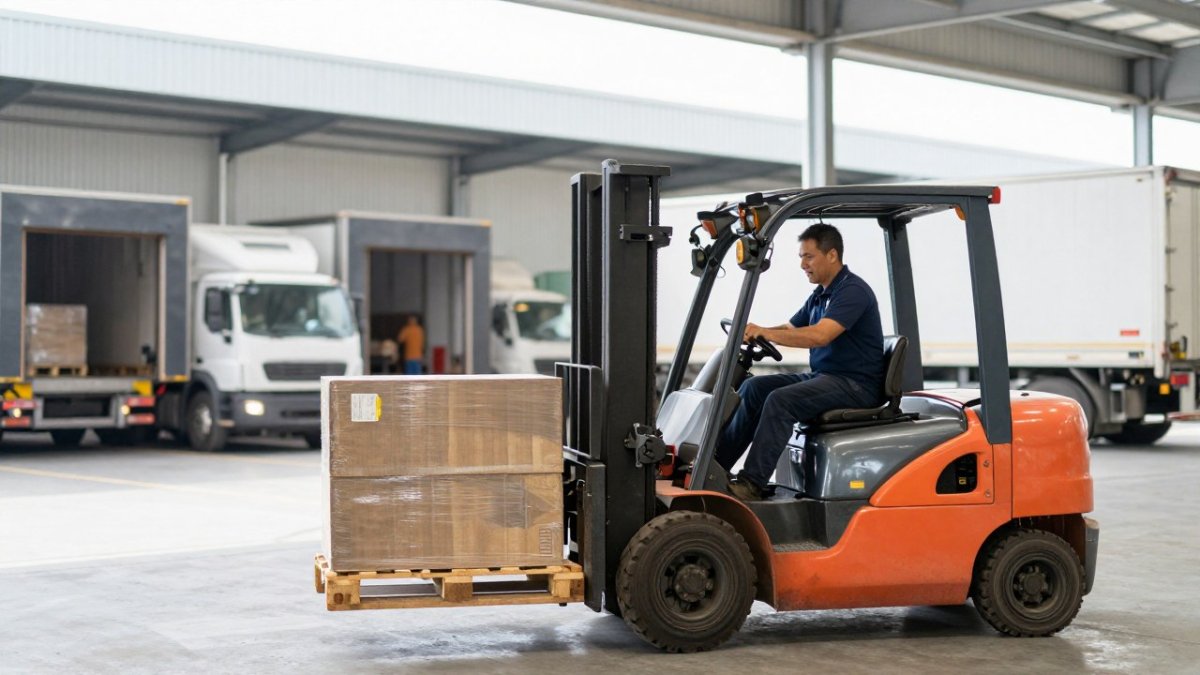
Freight consolidation is where much of the transport saving comes from. Combining small inbound shipments into fuller outbound loads reduces the number of trucks on the road and improves trailer use. That usually means lower cost per shipment and fewer partial loads running half empty.
Cross-Docking vs. Warehousing: Choosing the Right Model
Cross-docking and traditional warehousing solve different problems, and most supply chains need some of both. Cross-docking works best for goods with steady demand, clear destinations, and short planned dwell times. Warehousing suits seasonal stock, slow-moving SKUs, and products that must be held until demand appears.
A practical test is to ask how long the product needs to sit before it ships. Businesses that handle imports may also need bonded storage to defer duties, which is a separate consideration from cross-docking.
Types of Cross-Docking and Where Each Fits
(See the earlier section on cross-docking types above.)
Cross-Docking Challenges, Risks and How to Manage Them
Cross-docking is not free of risk. Its biggest weakness is dependency on timing: the model removes the buffer that storage provides, so every schedule deviation has to be absorbed somewhere else. The useful way to plan is to name the failure modes, judge how likely and how costly each is for your freight, and put a specific control against the ones that matter.
The Main Failure Modes
- Late or early inbound arrival. The outbound load waits, leaves partial, or ships late. Downstream effects include detention charges, missed retail delivery windows, and expedited freight to recover service.
- Missed connection at the dock. Freight arrives but the outbound trailer or route is not there, so product that was meant to flow through has to be held, often in the least suitable space in the building.
- Inaccurate labeling or advance shipment notice data. A wrong SKU, destination, or pallet count sends freight to the wrong door. Misroutes are expensive because they are usually discovered after the outbound truck has left.
- Dock door and staging congestion. Peak arrivals overwhelm doors and staging lanes, and freight queues in the yard or on the dock, which reintroduces dwell time the model was meant to remove.
- Demand or order changes after dispatch. A canceled or changed order on a cross-docked lane has no inventory buffer to absorb it, so the product either ships anyway or is stranded.
- Damage during rapid handling. Speed increases the risk of drops, compression, and mis-stacking, particularly with irregular or fragile loads.
- Supplier non-compliance. Suppliers who do not label, load, or sequence to specification force rework at the dock, which consumes the exact capacity cross-docking depends on.
- Disruption contingencies. Weather, carrier failures, border delays, and labor actions hit a cross-dock harder than a warehouse because there is no stored inventory to fall back on.
Matching Controls to Failure Modes
| Failure mode | Practical control |
|---|---|
| Late or early inbound | Appointment windows with defined tolerances, plus a documented late-arrival playbook that states when to hold the outbound, when to ship partial, and who authorizes the call |
| Missed connection | Trailer and route assignment confirmed before inbound unloading begins, not after |
| Labeling and ASN errors | Scan verification at receipt against the advance shipment notice, with a defined quarantine area for exceptions |
| Dock congestion | Door-level capacity planning by time slot, and a cap on appointments per window |
| Order changes after dispatch | Cut-off rules for order changes on cross-docked lanes, agreed with sales and customer service |
| Handling damage | Load standards, trained dock staff, and damage capture at the point of transfer rather than at delivery |
| Supplier non-compliance | A written supplier compliance standard with a corrective process, and lane-level review of repeat offenders |
| Disruption | A named fallback: which lanes can divert to storage, which carriers can absorb overflow, and how quickly the decision is made |
Measure the Risk, Not Just the Benefit
Risk management only works if it is measured. Track inbound on-time performance against appointment, dock-to-departure time for cross-docked freight, exception rate per hundred shipments, misroute rate, damage rate, and the cost of expedited recoveries.
Watch out: a cross-dock with no documented late-arrival playbook tends to resolve every exception by holding the outbound truck, which converts a schedule problem into a labor and detention cost across the whole dock.
Start With a Readiness Check
Before committing volume, test the lane against a short readiness checklist: is inbound timing reliable enough to plan a door slot, is the outbound destination known at the time of receipt, is the product labeled and sequenced to specification, and is there a fallback if the connection is missed? Lanes that pass on all four are good candidates. Lanes that fail on timing or labeling are better served by storage until the supplier and carrier performance improve.
Deciding Whether Your Shipments Are Ready for Cross-Docking
Not every shipment belongs on the dock. Good candidates usually have predictable demand, consistent supplier timing, and a clear destination.
Before committing, ask a few direct questions. How often does the product move? How reliable are inbound schedules? If the answers are mostly yes, cross-docking is worth testing on a limited set of lanes. Request a rate quote to see how cross-docking would apply to your volume, since pricing depends on quantity, dates, and delivery requirements.
Frequently Asked Questions
What are the main benefits of cross-docking services?
Cross-docking services mainly reduce the time products spend in storage, which lowers warehousing and inventory carrying costs. Because goods move directly from inbound to outbound trucks, handling steps and the labor tied to them also fall. Pricing depends on volume, dates and delivery requirements, so request a quote from GTC Logistics to see what applies to your shipments.
How does cross-docking reduce inventory holding time?
Cross-docking receives products, sorts them against existing orders and dispatches them on outbound transport without putting them into long-term storage. Inventory that spends hours rather than weeks in a facility ties up less working capital and takes up less space. The result is a shorter path from supplier to customer. Shipment timing and order volume determine how much holding time you can eliminate, so review your current order cycle before deciding.
What is the difference between cross-docking and traditional warehousing?
Traditional warehousing stores goods until customers or production need them, so storage space, inventory management and handling are central. Cross-docking moves goods through a facility in a short window, with little or no storage. Warehousing suits slow-moving or seasonal stock that must be held, while cross-docking suits fast-moving goods with predictable destinations. Many supply chains use both, each for the products it handles best.


