


Why Renting Your Own Warehouse in Montreal No Longer Makes Sense
For years, the playbook for Montréal businesses was simple: grow, lease a unit in Saint-Laurent, fill it with inventory, and hire a few people to pick and pack. Saint-Laurent earned that reputation. It sits next to Highways 40 and 13, minutes from Trudeau airport, and surrounded by the carriers, brokers, and customs infrastructure that move goods across Québec, Ontario, and into the U.S.
The location is still excellent. What has changed is the math on leasing it yourself. Here is why many small and mid-sized businesses are rethinking the decision, and what to compare before you sign.
1. A softer market doesn't remove the lease risk
Let's start with the good news for tenants: the frenzy is over. After record rent growth in the post-COVID years, Greater Montréal's industrial market has cooled. Colliers reported Q2 2026 average net asking rent at $13.94 per square foot, down modestly from the prior quarter, with vacancy at 5.7%. Avison Young measured vacancy at 7.4% for the same quarter, a gap that reflects how each firm defines the market. Either way, landlords are more willing to negotiate than they were two years ago.
But a cheaper asking rate doesn't make a lease flexible. Savills cautions that current asking rents often reflect first-year teaser rates, and tenants should expect larger escalations as landlords recover ground. Most industrial leases still run five to ten years, with annual increases and net charges (property taxes, insurance, maintenance) passed on to you. Savills also flagged a 39% jump in Montréal industrial tax assessments, which flows straight through to net charges.
You'd be locking in a fixed cost on a timeline your sales forecast can't guarantee.
2. You pay for space you don't use
Few businesses use 100% of their warehouse 100% of the time. Inventory swells before the holidays and shrinks in January. A product line gets discontinued. A big client switches suppliers.
With your own lease, you pay for peak capacity all year. With a 3PL, you pay for what you actually store and ship. For seasonal and fast-growing businesses, that difference adds up quickly.
3. Labour is the hidden cost
Rent is only the starting point. Running a warehouse means recruiting, training, scheduling, and retaining staff, then adding payroll taxes, CNESST premiums, overtime during peaks, and the cost of turnover.
Then there's management time. Every hour spent covering a no-show picker or chasing a forklift certification is an hour not spent on sales, product, or customers.
4. Equipment, systems, and compliance add up
A functioning warehouse needs more than four walls:
- Racking, forklifts, pallet jacks, and packing stations
- A warehouse management system connected to your e-commerce platform or ERP
- Insurance, security, and fire-safety compliance
- Bilingual labelling and documentation that meets Québec's language requirements
- If you import, customs knowledge and, for some goods, bonded storage
Each has an upfront cost, an ongoing cost, and a learning curve. A fulfillment partner has already absorbed them and spreads the cost across many clients.
5. Customers expect speed, and speed depends on systems
Shoppers expect same-day or next-day dispatch, tracking, and easy returns. Hitting that standard takes accurate inventory counts, tested processes, and carrier rates that small shippers rarely get on their own.
At GTC Logistics, inventory runs on Oracle NetSuite, so you get real-time visibility into stock levels instead of waiting for a spreadsheet update. Our cross-docking operation runs until 9:00 PM Monday to Friday (and weekends by appointment), which helps freight keep moving when your own team has gone home.
6. Flexibility is now a competitive advantage
Markets shift fast. A supply chain disruption, a new sales channel, or expansion into Ontario or the U.S. can change your needs within months. A long lease locks you into one footprint.
Outsourcing lets you scale up or down without renegotiating a lease, test new markets with little capital, and put your money into growth instead of fixed overhead.
What a Saint-Laurent 3PL can handle for you
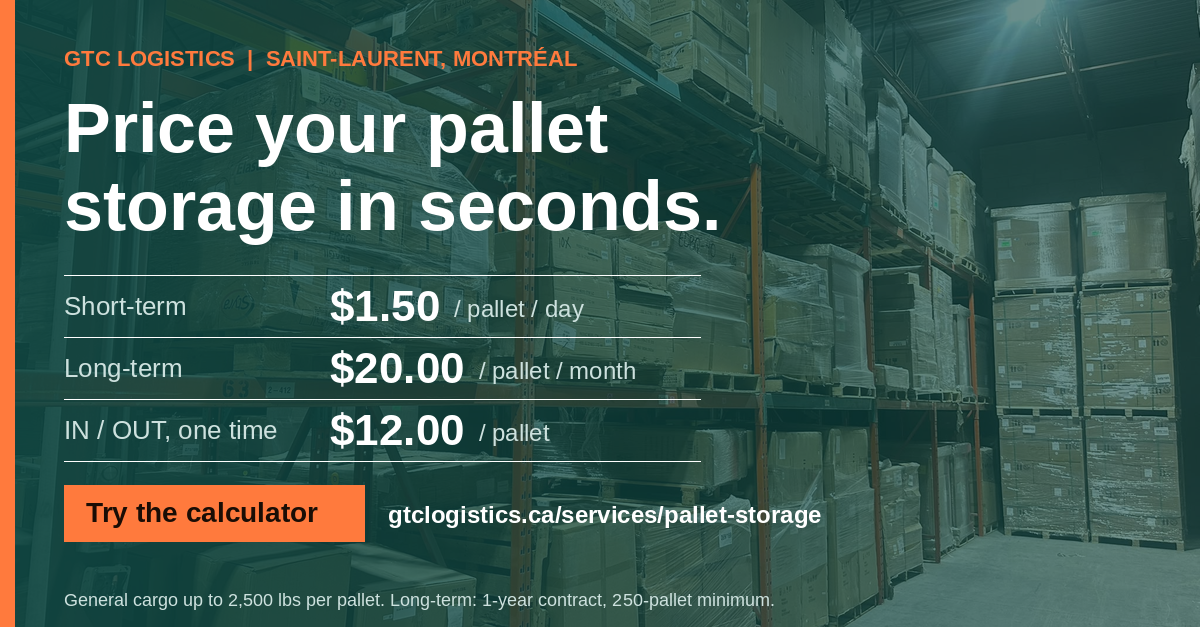
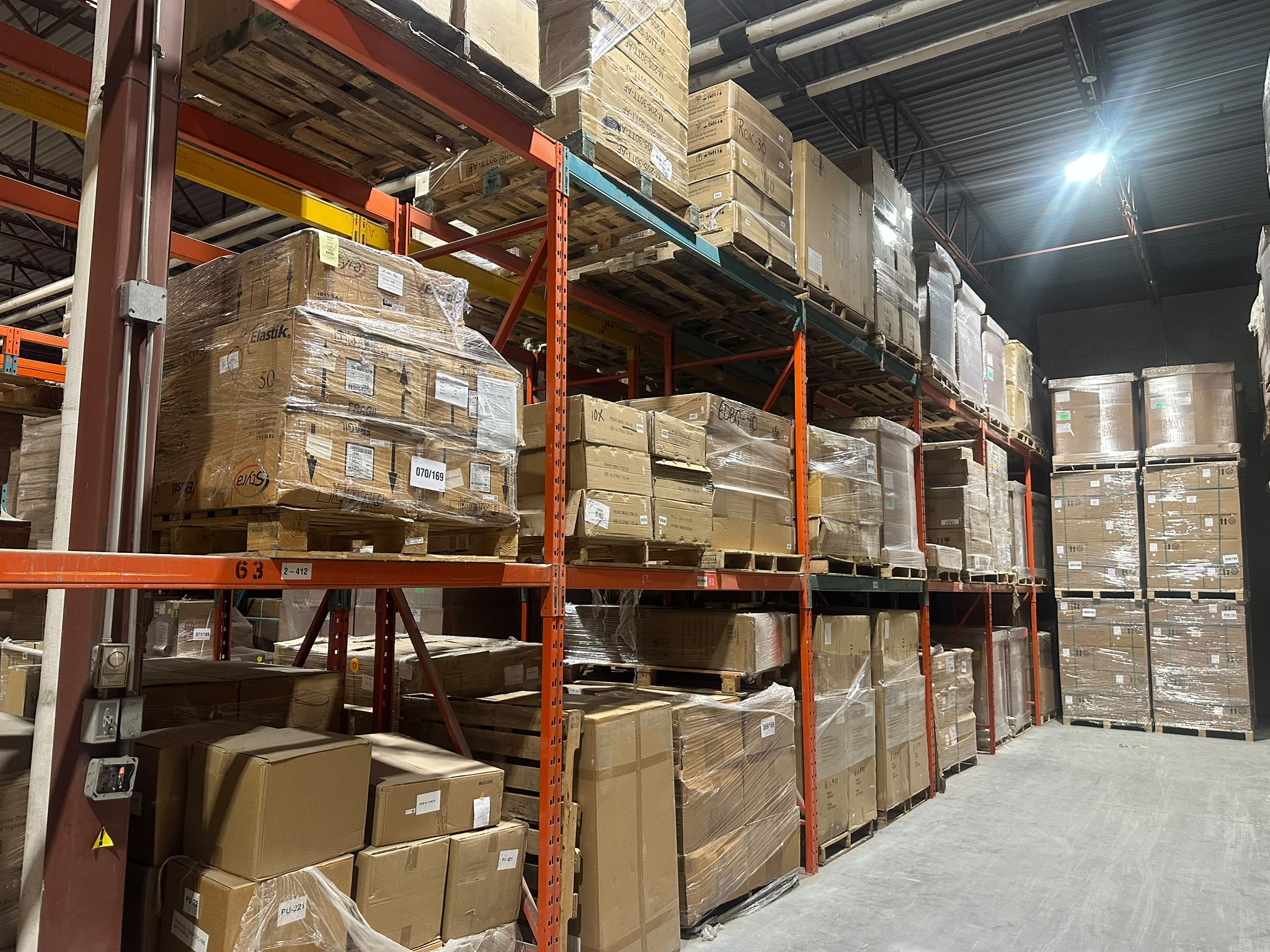
Our facility at 180 Rue Graveline offers 30,000 square feet of warehouse space, five dock doors, and 20,000 square feet of yard space. Depending on what you ship, we can help with:
- Fulfillment: storage, pick and pack, and shipping priced around your volumes, whether you ship ten orders a day or a thousand
- CBSA bonded warehousing: secure storage and container destuffing for imported goods
- Cross-docking: fast transfer of freight without long-term storage
- Amazon FBA support: inbound shipping, customs clearance, prep, and temporary storage when you hit FBA limits
When does your own warehouse still make sense?
To be fair, leasing your own space can still be the right call when:
- You have very high, stable volumes that justify the fixed cost
- Your products need specialized handling that no provider offers
- The warehouse is core to your operation, for example light manufacturing or assembly on site
For most small and mid-sized businesses, none of these apply.
The bottom line
Saint-Laurent remains one of the best distribution locations in Canada. You don't need to hold the lease to benefit from it. A local warehousing partner gives you the same location, infrastructure, and carrier network without the long-term commitment, the staffing burden, or the capital outlay.
Before you sign your next lease, add up your total cost: rent, net charges, labour, equipment, systems, and your own time. Then compare it with a pay-as-you-grow model.
Not sure where you land? Send us your current volumes and we'll prepare a free, no-obligation cost comparison between leasing your own space and working with GTC. Call us at 514-312-3884, email info@gtclogistics.ca, or request a warehouse quote.
Market figures: Colliers Montréal Industrial Market Report, Q2 2026; Avison Young Montréal Industrial Market Report, Q2 2026; Savills Montréal Industrial Market in Minutes, Q1 2026. Figures vary by firm and quarter. Check current reports before publishing or republishing.