



Last Updated: October 25, 2026
Quick Summary
Customs compliance for Canadian importers means understanding your role as the importer of record, who is legally responsible to the Canada Border Services Agency for accurate declarations, proper documentation, correct tariff classification, and timely duty payment. You must declare goods value, classify them by HS code, verify country of origin, and maintain records for six years to avoid audit exposure and penalties.
- You must retain all import records including invoices, packing lists, bills of lading, and certificates of origin for six years.
- Tariff classification errors can result in retroactive duty assessments, interest, and penalties up to 25% of unpaid duties.
- Request an advance ruling from CBSA when uncertain about product classification to remove ambiguity and protect against reclassification.
- A centralized import record system organized by shipment enables quick document retrieval if audited by CBSA.
- Bonded warehouse storage allows you to defer duty payment until goods are released for domestic sale or exported.
Table of Contents
- Understanding Your Role as a Canadian Importer
- Creating an Import Documentation Checklist
- Tariff Classification for Imported Goods
- Customs Recordkeeping Requirements for Importers
- CBSA Bonded Warehouse Requirements for Importers
- Managing Customs Audits and Corrections
- Building Your Customs Compliance Program
- Frequently Asked Questions
Understanding Your Role as a Canadian Importer
Customs compliance for Canadian importers starts with understanding what "importer of record" actually means. You're not just buying goods and reselling them, you're the legal entity responsible for ensuring those goods meet all regulatory requirements at the border and beyond.
Most importers underestimate how deeply this responsibility runs. The Customs Act establishes your obligations the moment goods arrive in Canadian territory. You must declare their value, classify them correctly by tariff code, verify their country of origin, and maintain records for six years. Missing any of these creates audit exposure, penalties, and potential release delays that can cripple your supply chain.
At GTC Logistics, we work with importers daily who've inherited compliance gaps from previous 3PLs or customs brokers. The pattern is always the same: incomplete documentation, misclassified goods, or tariff treatment errors that surface during a CBSA audit months later. The cost of fixing these retrospectively is far higher than getting it right upfront.
Your role as importer of record means you own the compliance outcome. Understanding that ownership is the foundation for everything that follows.
Creating an Import Documentation Checklist
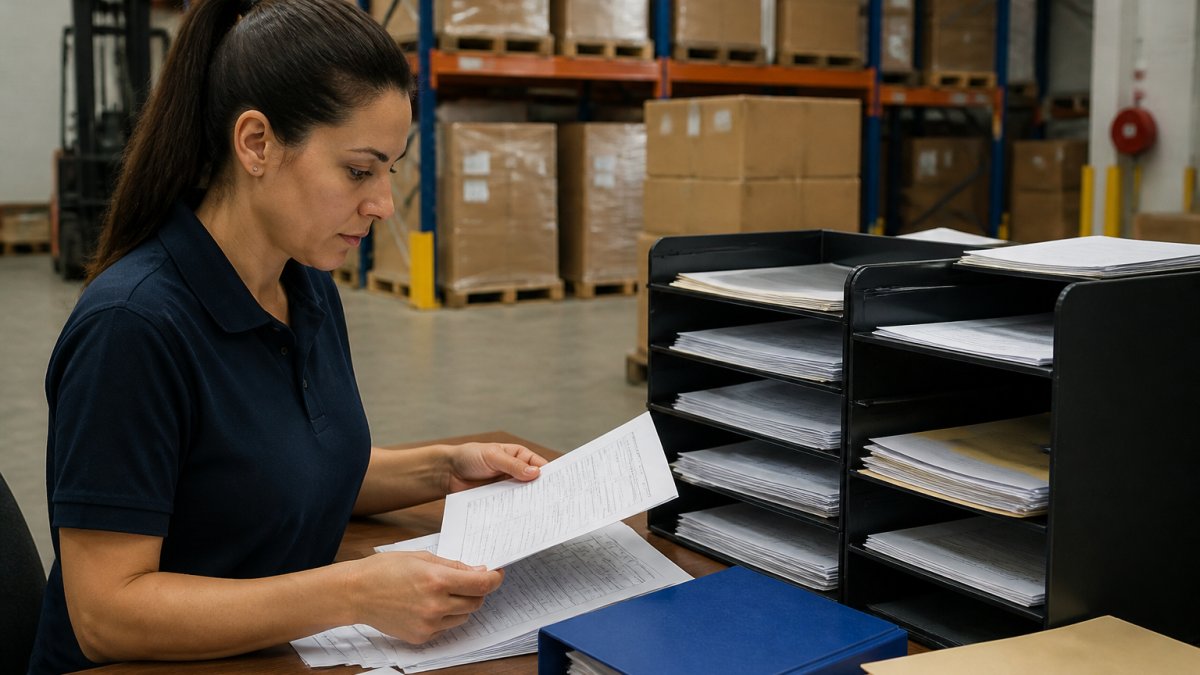
Documentation is your audit defense. When CBSA reviews your shipment, they're looking for specific evidence that you followed the rules. Without it, you're vulnerable to challenges, holds, and corrections that delay your goods.
Many importers skip the supplier declaration, thinking a commercial invoice is enough. It isn't. The supplier declaration is your proof of country of origin, critical for tariff classification and rules of origin verification.
The import documentation checklist should also flag product-specific requirements. If you're importing textiles, you need fiber content declarations. Cosmetics require safety assessments. Food items need health certificates. Electrical goods need compliance certifications. These aren't optional, they're conditions of release.
GTC Logistics maintains a standardized documentation template for all clients to ensure nothing gets missed before goods arrive. The template maps to CBSA requirements, not just what brokers ask for. That discipline prevents the costly corrections most importers face mid-audit.
| Documentation Type | Purpose | Retention Period |
|---|---|---|
| Commercial Invoice | Proof of transaction value for duty calculation | 6 years |
| Packing List | Itemization of goods by box/container | 6 years |
| Bill of Lading / Airway Bill | Proof of shipment and carrier | 6 years |
| Certificate of Origin | Proof of country of origin for tariff treatment | 6 years |
| Purchase Order | Evidence of buyer-seller agreement | 6 years |
| Product Certifications | Compliance proof (electrical, safety, etc.) | 6 years |
| Permits/Licenses | Regulatory clearance for controlled goods | 6 years |
Tariff Classification for Imported Goods
Tariff classification determines your duty rate. Get the HS code wrong, and you pay the wrong duty, sometimes significantly more than you should.
The HS code is a six-digit number that identifies what your product is. The first two digits represent the chapter (e.g., 62 = apparel), the next two represent the heading, and the final two represent the subheading.
Tariff classification for imported goods requires you to know the material composition, intended use, and technical specifications of what you're importing. You can't guess.
The common mistake is relying on your supplier's description. They'll say "cotton blend fabric," but the actual fiber content might be 40% cotton, 60% polyester, which changes the code.
Preferential tariff treatment under trade agreements (like USMCA) depends on correct HS classification. Misclassify a product and you lose access to duty-free or reduced-rate treatment. That's a significant cost on high-volume imports.
When you're uncertain about classification, you can request an advance ruling from CBSA. They'll review your product description and provide an official classification decision before you import. This removes ambiguity and protects you from retroactive reclassification.
Customs Recordkeeping Requirements for Importers
Six years. That's how long you must keep every record related to your imports. Not three years, not four, six. CBSA can request records going back six years for any shipment, and if you can't produce them, you're in violation.
Customs recordkeeping requirements for importers cover the commercial invoice, packing lists, bills of lading, certificates of origin, purchase orders, payment records, and any correspondence with your supplier or customs broker.
The challenge isn't knowing what to keep, it's organizing it so you can retrieve it quickly if audited. Most importers store documents across email, cloud drives, accounting software, and filing cabinets.
A centralized import record system, whether that's a spreadsheet, accounting software, or a dedicated customs management platform, is essential. Every shipment should have a file with all supporting documents linked together.
Digital records are acceptable to CBSA, but they must be maintained in a format that preserves the original information. If you scan documents, ensure the scans are legible and complete.
Watch out: if you're audited and can't produce records, CBSA can assess duties based on their own estimate of value or classification. This estimate is often higher than what you actually owe, and you have the burden of proving otherwise.
CBSA Bonded Warehouse Requirements for Importers
A CBSA bonded warehouse is a secure facility where imported goods can be stored without paying duties immediately. This is critical for importers managing cash flow or holding inventory before sale.
CBSA bonded warehouse requirements for importers are strict. The facility must be licensed by CBSA, which means it meets security standards, has proper documentation systems, and undergoes regular audits.
As the importer, you retain ownership of goods in a bonded warehouse. You can move them between bonded facilities, repackage them, or consolidate shipments. You pay duty only when goods are released for sale in the domestic market.
The key advantage is cash flow. If you import 1,000 units worth of goods with a 10% duty rate, you're deferring that duty payment until units are sold. For businesses importing containers quarterly, this can mean significant working capital relief.
Learn bonded warehouse requirements for importers to understand compliance obligations in detail, including CBSA licensing, security bonds, and duty deferral mechanics. You can also explore benefits of CBSA bonded warehousing services to see how duty deferral and improved cash flow work in practice.
GTC Logistics operates a CBSA-licensed bonded warehouse in Saint-Laurent. We handle container destuffing, inventory segregation, and all documentation required for bonded storage. Our team manages your importer account with CBSA, ensuring goods are tracked correctly and released on schedule.
Managing Customs Audits and Corrections
A CBSA audit can feel like a crisis, but it's manageable if you understand the process. CBSA has "reason to believe" that you've made an error or omission in your import declaration.
Most audits focus on a sample of shipments over a specific period, not your entire import history.
The correction obligation is clear: if you discover an error yourself, you must notify CBSA within four years and pay the difference. If CBSA discovers the error first during an audit, you still owe the duty and interest, but you may face penalties on top.
Watch out: penalties for customs violations can reach 25% of the unpaid duty. If you owe $10,000 in duties due to misclassification, penalties could add another $2,500. This is why getting classification right upfront matters so much.
Your defense during an audit is documentation. If you can show that you relied on a supplier's declaration, obtained an advance ruling, or consulted a customs broker, you have evidence of due diligence.
Learn how to avoid customs clearance delays with a step-by-step guide covering documentation preparation, advance information submission, and clearance best practices. These same practices reduce audit risk by demonstrating systematic compliance.
After an audit, take time to understand what went wrong. Was it a classification issue? A valuation problem? A missing document? Use that insight to update your internal controls so the error doesn't repeat.
Building Your Customs Compliance Program
Customs compliance isn't a one-time checklist, it's an ongoing program. As you scale imports, your risk exposure grows. What worked for 10 shipments a month won't work for 100.
A customs compliance program has three components: process, documentation, and oversight. The process defines how you classify goods, calculate transaction value, verify origin, and prepare declarations. Documentation ensures every decision is recorded and retrievable. Oversight means someone reviews shipments regularly to catch errors before CBSA does.
Start by mapping your current process. How do you decide which HS code to use? Who verifies that your supplier's declared value is accurate? When do you check certificates of origin?
Document the correct process in writing. Create a classification guide for your product categories.
Explore bonded warehouse services as a component of your compliance infrastructure. A licensed bonded facility reduces risk by adding a third-party audit layer and simplifying duty deferral mechanics.
Training is critical. Your team should understand why customs compliance matters, what errors cost, and how to execute your process correctly.
Review your program quarterly. Did you find any errors? Did CBSA raise questions? Are there product categories where you're uncertain about classification? Use these insights to refine your process.
Customs compliance for Canadian importers is fundamentally about control, knowing what you're importing, why you're importing it, and ensuring every declaration reflects the truth.
Customs compliance for Canadian importers is complex, but it's manageable with the right structure and discipline.
Canada Border Services Agency Customs Compliance Guide
Harmonized Tariff Schedule of Canada
CBSA Advance Ruling Program for Tariff Classification
Frequently Asked Questions
What documents do importers need for customs clearance?
Canadian importers must provide a commercial invoice, packing list, bill of lading or airway bill, proof of origin, and a customs declaration form. The commercial invoice must show the seller, buyer, description of goods, quantity, price, and terms of sale. A certificate of origin may be required depending on the product and trade agreement. Your customs broker or freight forwarder can guide you on product-specific documentation needs.
How long must importers keep customs records?
The Customs Act requires importers to retain all customs records for a minimum of six years from the date of import. This includes commercial invoices, packing lists, bills of lading, proof of origin, customs declarations, and any communications with the Canada Border Services Agency. Maintaining organized, accessible records protects you during audits and helps you resolve discrepancies quickly.
How do Canadian importers determine tariff classification for imported goods?
Tariff classification uses the Harmonized System (HS) code, a standardized numbering system that determines the duty rate and any applicable trade agreements. You can find the correct HS code using the Canadian International Merchandise Trade Database or by consulting a customs broker. Misclassification can result in incorrect duties, penalties, and shipment delays, so accuracy is critical for customs compliance.
What happens if an importer makes an error on a customs declaration?
If you discover an error after clearance, you must correct it promptly by filing an amended customs declaration with the Canada Border Services Agency. Failure to report errors can result in penalties, duty adjustments, and increased audit risk. Honest, timely corrections demonstrate good faith and reduce the severity of any compliance issues. Document all corrections and keep records of your amendment submissions.
What is a customs compliance audit?
The Canada Border Services Agency conducts customs audits to verify that importers are complying with the Customs Act and related regulations. Auditors review your import records, documentation, tariff classifications, valuations, and origin claims. They may request shipment details, supplier invoices, and correspondence. Responding thoroughly and honestly to audit requests is essential; failure to cooperate or unresolved discrepancies can lead to penalties and restrictions on future imports.
How do importers determine the duties and taxes payable on imported goods?
Duties are calculated using the tariff rate for the HS code, the transaction value of the goods, and the country of origin. Goods from countries with trade agreements (such as USMCA) may qualify for preferential rates. The transaction value includes the purchase price, freight, insurance, and any royalties or assists. Accurate valuation is critical; undervaluing goods to avoid duties is illegal and triggers penalties and additional assessments.


