


Last Updated: November 12, 2026
Quick Summary
Short-term pallet storage suits inventory that moves within weeks, while long-term pallet storage suits stock that waits for a seasonal peak or slow sales cycle. The right choice depends on expected stay length, handling frequency and how predictable your volume is.
- Short-term terms offer flexibility, but frequent in-and-out handling fees can outweigh a lower daily rate.
- Long-term storage can reduce handling events, lowering fees and the risk of damage to goods.
- Long-term arrangements often carry minimum terms, so confirm exit terms before signing.
- Plan capacity around peak pallet count and expected duration, not just the average.
Table of Contents
- Short-Term Versus Long-Term Pallet Storage: What Changes
- What Short-Term Pallet Storage Is Best For
- When Long-Term Pallet Storage Makes Sense
- How Pallet Storage Capacity and Space Are Planned
- Total Cost Comparison: Storage, Handling and Break-Even Points
- Pallet Storage and Fulfillment: Where Handling Fits
- Choosing Your Pallet Storage Setup with GTC Logistics
- Frequently Asked Questions
Short-Term Versus Long-Term Pallet Storage: What Changes
Pallet storage is the practice of holding palletized inventory in a warehouse for a set period, with fees charged per pallet. Most clients ask the same question: should the stock sit for a few weeks or a few quarters?
Short-term storage fits inventory that moves in days or weeks. Long-term storage suits stock that waits for a seasonal peak, a project, or a slow sales cycle. The difference is not only the length of stay.
Many businesses start with short-term terms because they have less commitment. As their volume becomes predictable, they often move parts of their stock to longer arrangements. Watch the mix carefully. A pallet that sits longer than planned can quietly erode the margin on the goods inside it.
What Short-Term Pallet Storage Is Best For
Short-term pallet storage works best for inventory with fast turns and uncertain demand. Think of a product launch, a promotional run, or overflow stock during a busy month.
The advantages are flexibility and low commitment. You pay for the space you use, for the period you use it.
The trade-off is that per-movement fees add up. Every inbound and outbound handling event carries a cost, so frequent in-and-out activity can outweigh a lower daily rate. If your pallets leave within a few weeks, short-term terms are usually the right choice. If they keep coming back, run the numbers before assuming it is cheaper.
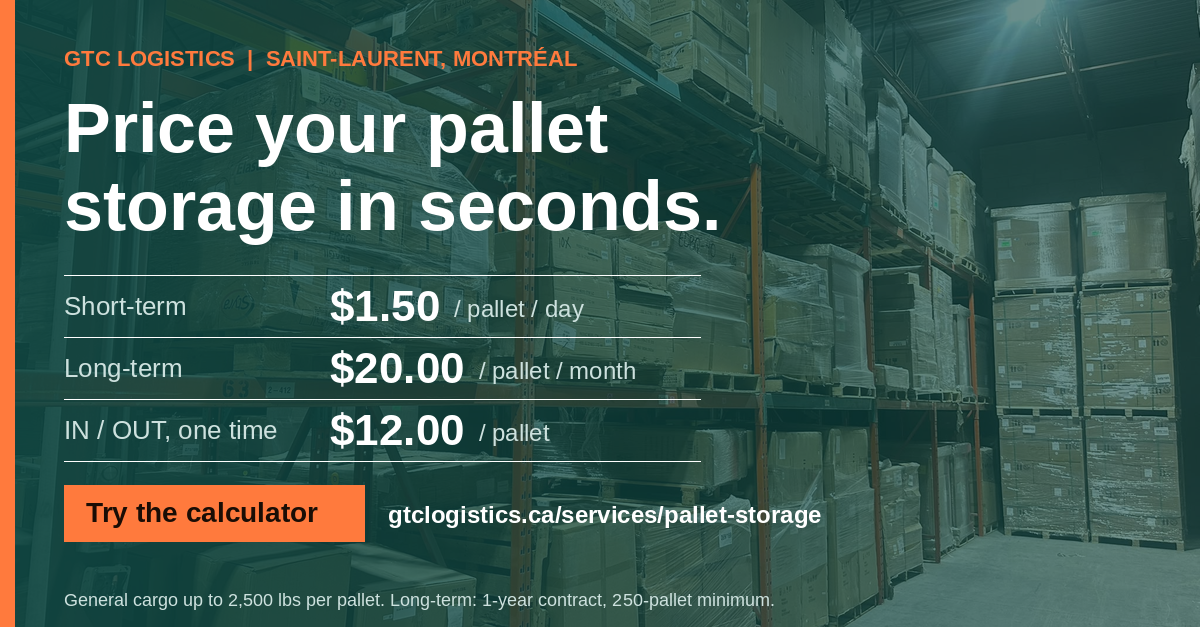
You can see the current short-term rates and use the storage calculator on our pallet storage page to estimate costs for your own pallet count.
When Long-Term Pallet Storage Makes Sense
Long-term storage makes sense when inventory is predictable and needs to wait. Seasonal stock, bulk purchases timed to a supplier discount, and slow-moving project inventory are common examples.
Longer stays can reduce the number of handling events. That reduces the number of times staff touch the goods, which lowers both fees and the risk of damage.
Be realistic about commitment. Long-term arrangements often carry minimum terms and less flexibility to exit. Before signing, confirm the minimum period, how stock is counted, and what happens if your inventory clears sooner than expected.
How Pallet Storage Capacity and Space Are Planned
Capacity planning is where most storage quotes go wrong. A provider quotes a per-pallet rate, the client assumes it applies to their pallets, and the first inbound shipment reveals that height, weight, or stackability changes the price. Planning capacity properly means matching your pallet profile to the facility's rack and floor configuration before you commit to a term.
Start with the pallet profile, not the pallet count
Four measurements drive capacity and price:
- Footprint, the standard North American grocery pallet is 48 by 40 inches, but many import loads arrive on 1200 by 1000 mm pallets or on custom footprints. A non-standard footprint may not fit standard rack bays and can be charged as over-dimensional.
- Height, rack beams are set at fixed levels, and a pallet that exceeds the clear height of a bay cannot be double-stacked or may need floor space instead of rack space. Measure the loaded height, not the pallet alone.
- Weight, rack capacity and forklift handling limits apply per pallet position. Heavy loads may need floor storage or reinforced racking, both of which change the rate.
- Stackability, crushable or unstable loads cannot be double-stacked, so they consume more cubic space per pallet and are often priced accordingly.
A provider that asks only for pallet count is quoting blind. A provider that asks for dimensions, weight, and stackability is quoting what you will actually pay.
Plan for peak, not average
Three numbers should drive the space request: average pallets held, peak pallets during your busiest period, and the duration of that peak. A business averaging 40 pallets but reaching 90 during a seasonal rush needs an arrangement that covers both without paying for 90 positions year-round. The common pattern is a contracted base for the average plus a flexible overflow allowance for the peak, confirmed in writing so the overflow rate is known before the rush arrives.
Rack space versus floor space
Not all pallet positions are equal. Rack positions allow vertical storage and faster retrieval by location, but they are limited by beam height and weight rating. Floor positions suit over-height, over-weight, or non-stackable loads but consume more square footage per pallet. Ask how your pallets will be stored and whether the quoted rate assumes rack or floor. A rate that assumes rack space can change once the facility sees an over-height load.
Access frequency shapes the layout
Stock that is accessed often needs to sit near the dock so each pull is short and cheap. Stock that rarely moves can sit deeper in the facility or higher in the rack. Tell your provider your expected access frequency per pallet per month, not just your pallet count. A pallet pulled twice a week is a different storage product from one pulled twice a quarter, and the layout should reflect that.
Disclose the full pallet profile, including any over-height or non-stackable loads, at quote stage.
Inventory visibility and reporting
Capacity planning does not end at space. Ask how the provider tracks locations, whether they run a warehouse management system, how often stock counts are reconciled, and whether you can see on-hand quantities by lot or expiry date. For long-term stock, lot and expiry tracking matters because slow-moving inventory can expire in place. For short-term overflow, real-time on-hand visibility matters because you need to know what is available to ship. Confirm the reporting cadence and format before you sign, and confirm whether system access is included or billed separately.
Total Cost Comparison: Storage, Handling and Break-Even Points
The true cost of pallet storage is never the headline rate. It is the sum of storage fees plus every handling event plus any accessorial charges, divided by the units you actually sell. A side-by-side total-cost view helps clarify storage decisions.

The five cost lines to compare
Every pallet storage quote should be broken into the same five lines so short and long terms can be compared fairly:
- Storage fee, charged per pallet per day, per week, or per month, depending on the provider.
- Inbound receiving, charged per pallet or per container when stock arrives, and often includes unloading, count verification, and put-away.
- Outbound handling, charged per pallet or per order when stock leaves, and may include staging, labeling, and loading.
- Access and picking, charged when you need a pallet pulled for inspection, partial withdrawal, or order fulfillment rather than a full outbound shipment.
- Accessorials, re-palletizing, shrink-wrap, over-dimensional storage, and long-dwell surcharges if a pallet sits beyond a stated threshold.
A short-term quote with a low storage rate but high per-movement fees can cost more than a long-term quote with a higher monthly rate and fewer touches. The only way to know is to total all five lines over the expected stay.
A worked break-even example
Assume a business holds 50 pallets for 12 weeks. Under a short-term arrangement, storage is billed weekly and every pallet is received once and shipped once, with two access pulls per pallet during the stay.
Rather than plugging in invented rates, use your own quotes and apply this formula:
Total cost = (storage rate × pallets × periods) + (inbound fee × pallets) + (outbound fee × pallets) + (access fee × pulls) + accessorials
Then divide total cost by the number of units sold from those pallets to get a cost-per-unit figure. That number, not the per-pallet rate, is what you compare against your margin.
The break-even point sits where the short-term total equals the long-term total. In general terms, short-term arrangements can suit stock that turns quickly, while longer terms can suit stock that stays longer with fewer movements.
Watch out: a long-term minimum term can erase the savings if your inventory clears early.
Seasonal and overflow inventory
Seasonal stock is the hardest case to price because the stay is uncertain. A common pattern is to place a steady base of slow-moving inventory on a long-term term and route peak overflow through short-term space. That keeps the predictable volume on the cheaper rate while avoiding a long commitment on stock that may clear in six weeks. Ask your provider whether overflow pallets can be billed at the short-term rate without renegotiating the base contract.
Pricing depends on quantity, dates, pallet dimensions, and delivery requirements. For current figures, request a quote.
The table below lists the five cost lines to compare when weighing short-term against long-term pallet storage.
| Cost line | What it covers | Note |
|---|---|---|
| Storage fee | Charged per pallet per day, week, or month | Billing period varies by provider |
| Inbound receiving | Unloading, count verification, and put-away | Charged per pallet or per container |
| Outbound handling | Staging, labeling, and loading | Charged per pallet or per order |
| Access and picking | Pulls for inspection, partial withdrawal, or fulfillment | Charged when pallets are pulled |
| Accessorials | Re-palletizing, shrink-wrap, over-dimensional storage | Long-dwell surcharges may apply |
Pallet Storage and Fulfillment: Where Handling Fits
Storage and fulfillment are related but separate. Storage holds the pallet. Fulfillment picks, packs and ships individual orders from that stock. Many businesses need both, and the handling fees depend on how the two connect.
If you sell through e-commerce channels, the handling model matters. Pallet-level movement is cheaper than unit-level picking, but you may need to break pallets down before fulfilling orders. Ask how cases are counted, how returns are processed, and whether receiving and shipping are billed separately.
GTC Logistics offers ocean shipping coordination and Amazon FBA preparation, and these can be planned alongside storage. A clear picture of these fees before you sign protects your margin.
Choosing Your Pallet Storage Setup with GTC Logistics
Start by listing your expected stay, average pallet count, peak count, and how often you need access. Those four facts point you toward short-term, long-term, or a combination.
Then check the handling side. Confirm the inbound and outbound fees, the minimum storage period, and any requirements for bonded inventory if you import goods. These details shape the true cost far more than the headline rate.
GTC Logistics operates a secure facility with cross-docking and bonded warehousing services. If your inventory is moving through customs or needs fast distribution, our bonded warehouse services and fulfillment services can be planned together. Request a rate quote to see how the options fit your volume, and we will help you choose the setup that keeps your costs and your stock moving.
Frequently Asked Questions
What is the difference between short-term and long-term pallet storage?
Short-term pallet storage covers stock that moves in weeks or a few months, such as seasonal peaks or overflow from a main site. Long-term storage holds inventory for extended periods, often with a lower rate per pallet per month because the warehouse can plan space around a steady commitment. Pricing depends on quantity, dates, and handling needs, so request a quote from GTC Logistics for current figures tied to your inventory.
How long can pallets be stored in a warehouse?
There is no single limit that applies to every warehouse. Storage duration is usually set by the service agreement, which can range from a few days to many months. Stock that sits for a long time should be reviewed regularly for condition and turnover. Ask about minimum storage periods and any contract commitments before you agree to terms, since these affect your total cost.
When should a business use short-term pallet storage?
Short-term pallet storage suits businesses with seasonal demand, promotional stock, or overflow inventory that needs a temporary home. It is also useful when a product line is being tested or when a warehouse move is underway. Because the stock turns over quickly, access frequency and handling fees often matter more than the monthly storage rate. Confirm inbound and outbound handling costs when comparing options.
How is pallet storage capacity calculated?
Pallet storage capacity is based on how many pallets fit in the space, which depends on pallet dimensions, stacking limits, aisle width, and how the racking or floor space is arranged. Your provider should confirm the usable positions for your pallet size and product weight. Share your pallet dimensions and expected volume early so the space plan matches your inventory and access needs.