


Last Updated: November 8, 2026
Quick Summary
Most small businesses choose warehouse storage based on how much stock they hold, how often it moves, and how much they can spend without tying up cash. Static and adjustable shelving are the cheapest starting points, pallet racking makes best use of height, and off-site storage lets you pay only for the space you use.
- Plan warehouse storage for your next stage of volume, not just today's stock.
- Pallet racking is usually the best use of height in a small warehouse.
- Measure usable cubic capacity, not raw square footage, before choosing a layout.
- Aim for 60-75% space utilization; above that picking slows, below 50% you pay for air.
- Compare total off-site storage cost, including transport, handling, insurance and staff time.
Table of Contents
- Why Warehouse Storage Choices Matter More for Small Businesses
- Types of Warehouse Storage Systems at a Glance
- Pallet Racking for Small Warehouses: Configurations and Limits
- Small Warehouse Storage Ideas for Parts, Cartons and Bins
- Warehouse Space Optimization: Getting More From Limited Floor Space
- Off-Site Warehouse Storage for Small Businesses: When It Makes Sense
- Matching a Storage Setup to Your Business and Inventory Type
- Requesting a Rate Quote for Your Storage Needs
- Frequently Asked Questions
Choosing the right warehouse storage for a small business comes down to three things: how much stock you hold, how often it moves, and how much you can spend without tying up cash. Get the setup wrong and you pay for space you do not use, or lose time hunting for product that sits behind something else. The questions below are the ones small operators most often ask when facing this decision. This guide walks through the main storage types, the trade-offs of each, and how to match a setup to your inventory.
Warehouse storage is the space and equipment a business uses to hold goods between receiving and sale. It can mean racking inside your own building, shelving for smaller items, or space rented from a third party. The right mix depends on what you sell and how quickly it moves.
Why Warehouse Storage Choices Matter More for Small Businesses
Large distributors can absorb an inefficient layout. A small business usually cannot. When you have a few hundred square feet, every wasted metre of aisle is lost capacity, and every misplaced carton costs picking time you do not have.
Most small operators make the same early mistake. They buy shelving for the stock they have today, then grow into it within a year. Plan for the next stage of volume, not just the current one. A flexible setup costs little more upfront and avoids a costly rebuild later.
Storage also ties directly to cash. Inventory you cannot find, or stock that sits too long, is money you have already spent. Good storage shortens the time between buying a product and selling it.
Types of Warehouse Storage Systems at a Glance
Most small businesses choose from a short list of systems. Each suits a different kind of inventory. If you need to store goods before duties are paid, our bonded warehouse services cover that option.
| System | Best for | Main limit |
|---|---|---|
| Static shelving | Light cartons, bins, small parts | Low vertical use, fixed layout |
| Adjustable shelving | Mixed inventory with changing sizes | Lower load capacity than racking |
| Pallet racking | Full pallets, bulk stock | Needs clear aisles and load planning |
| Mobile shelving | Maximum density in a fixed footprint | Higher cost, needs solid floors |
| Mezzanine | Adding usable floor without a larger building | Permits, load checks, access |
Static and adjustable shelving are the cheapest entry points and easiest to move. Pallet racking is usually the best use of height in a small warehouse, though it requires careful planning. Mobile shelving packs the most product into a fixed footprint, but the mechanisms cost more, and not every floor can carry them.
Pallet Racking for Small Warehouses: Configurations and Limits
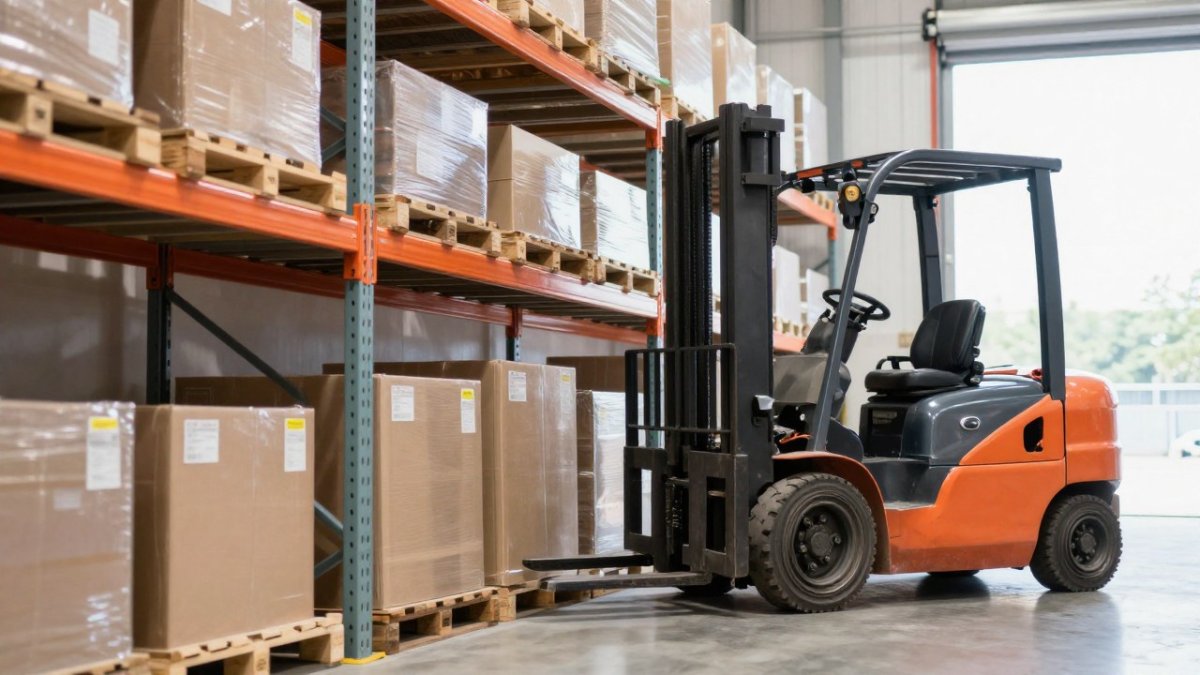
Pallet racking lets you stack goods vertically, which matters most when floor space is tight. The main configurations are selective racking, which gives direct access to every pallet, and drive-in or push-back systems, which store more pallets per aisle at the cost of picking speed.
Selective racking suits most small operators because it keeps every pallet reachable. Drive-in systems fit businesses that hold large volumes of the same product.
Limits matter here. Every rack has a rated load capacity per level and per bay, and that rating drops if beams are damaged or misaligned. Overloading a rack is a safety risk, not just a efficiency problem. Have a qualified installer confirm the ratings for your stock weights and check the racks regularly for damage. Watch out: a rack that looks sturdy can still be overloaded, so label the rated capacity on each bay.
Small Warehouse Storage Ideas for Parts, Cartons and Bins
Not everything arrives on a pallet. Small parts, loose cartons and individual items need a different approach. Bin shelving with labelled, stackable containers makes picking fast. Wire shelving allows good airflow and visibility. Drawer units and small-parts cabinets work well for inventory that is high in count but low in size.
Organize by pick frequency. Put fast-moving items at waist height, near the packing area. Slow movers can go higher or further back. Label every bin with its SKU and quantity so staff can find stock without searching. This single habit often saves more time than any new equipment.
Warehouse Space Optimization: Getting More From Limited Floor Space
Most small warehouses have more usable space than they use. The problem is usually layout, not size. To fix it, stop guessing and measure. Start by calculating your usable cubic capacity: multiply the floor area you can actually stack on by the clear height to the sprinkler heads or ceiling.
Next, map your stock by velocity. A simple ABC analysis works: rank SKUs by how often they ship, then group the top 20% as A items, the next 30% as B, and the rest as C. Place A items at waist-to-shoulder height within two metres of the packing bench.
Measure space utilization as a percentage: divide the cubic volume actually occupied by stock by your usable cubic capacity. A common target for small facilities is 60-75%; above that, picking slows because aisles clog. Below 50%, you are paying for air.
Watch out: narrowing aisles to gain storage can backfire if you still need a forklift or pallet jack to pass. Measure your widest handling equipment and keep at least the manufacturer's minimum aisle clearance; a few extra centimetres of racking is not worth a blocked aisle during a busy shift.
Cross-docking is one option worth understanding. Goods are received and moved straight to outbound transport without long-term storage. It can free up floor space for businesses with fast turnover, though it works best when shipments are predictable. Our guide on cross-docking services for faster freight movement explains how the process works.
The biggest gains usually come from a simple audit. Count how much floor space holds active stock versus dead stock, and move or clear the dead stock first. For many small operators, that single step frees more room than buying new racking.
Off-Site Warehouse Storage for Small Businesses: When It Makes Sense
Owning or leasing your own warehouse is not always the right call. Rent, labour, equipment and the cost of unused space add up quickly, especially for a business with seasonal swings. Off-site storage lets you pay for the space you use and scale up or down with demand.
Short-term storage suits businesses with peaks, such as a holiday season or a product launch. Long-term storage works for stock you hold steadily but do not need on site. A third-party partner can also handle receiving and fulfilment, which frees your team to focus on sales.
Compare the total cost, not just the monthly rate. Include transport in and out, handling fees, insurance, and the staff time you would spend managing the space yourself. Our short and long-term pallet storage options show how flexible rental terms can work, and our analysis of when leasing your own warehouse stops making sense sets out the cost comparison in detail.
Matching a Storage Setup to Your Business and Inventory Type
The right setup depends on what you sell, how fast it moves, and how much you can spend before you see a return. Instead of a generic checklist, use this decision framework built around four business profiles that small operators commonly fall into.
Profile 1: High-SKU, low-volume (e.g., electronics accessories, specialty parts). You hold hundreds or thousands of small items, each selling slowly. Prioritize adjustable shelving and bin shelving with clear labelling. A pick-to-light or simple bin-location system pays for itself quickly because staff stop hunting. Avoid pallet racking unless you also hold bulk stock; the cube is wasted on small cartons.
Profile 2: Low-SKU, high-volume (e.g., a single product line, seasonal goods). You ship the same items repeatedly. Selective pallet racking with dedicated pick faces near the dock works well. If you hold large volumes of identical pallets, drive-in racking stores more per aisle, but only if you can accept slower access.
Profile 3: Mixed inventory with seasonal swings. You need flexibility more than density. Combine static shelving for stable items with selective racking for pallets, and use short-term off-site storage for peak overflow. Reconfigurable shelving (boltless or clip-together) lets you change layout without a rebuild.
Profile 4: Fast-growth small business. You expect volume to double within 12-18 months. Buy for the next stage, not today. Choose racking with spare upright capacity and shelving that can add levels. Avoid custom-built mezzanines until your layout stabilizes; a mezzanine is expensive to move. Instead, lease modular mezzanine systems or use off-site storage to bridge growth spurts.
Across all profiles, measure three numbers before you commit: your SKU count, your inventory turns (cost of goods sold divided by average inventory value), and your peak-period volume. A business with 500 SKUs and 12 turns per year needs a different setup than one with 50 SKUs and 4 turns. If you are unsure, start with an inventory audit. Measure your stock, count your turns, and note your peak periods.
Our fulfilment services can also take over picking and shipping if running storage in-house is not practical for your team.
Requesting a Rate Quote for Your Storage Needs
Storage pricing depends on quantity, dates and delivery, so no single figure applies to every business. The most useful next step is to request a quote from GTC Logistics, using the rate request option on our website, so we can review your needs and provide current pricing.
Ready to find the right storage setup? Request a rate from GTC Logistics and get a plan built around your inventory and growth.
Frequently Asked Questions
What is the best storage system for a small warehouse?
The best system depends on what you store, how fast it moves and how much height your building allows. Small parts and fast-moving cartons usually suit shelving and bin systems, while pallets of bulk stock suit pallet racking. Many small operations combine two or three types rather than choosing one. Before deciding, measure your inventory dimensions, count your monthly picks and confirm the clear height and floor load rating of your space. Pricing depends on quantity, dates and delivery, so request a quote from GTC Logistics for current figures.
How can a small business maximize warehouse storage space?
Start by using vertical space, since racking and mezzanines add capacity without expanding the footprint. Organize inventory so that high-turnover items sit closest to the dock or pick area, and keep slow movers higher or farther away. Clear aisles to a width that your equipment needs, and avoid storing items in spaces that cannot be accessed without moving other stock. Reviewing your layout every few months as inventory changes keeps the space working as your business grows.
When should a small business use off-site warehouse storage?
Off-site storage makes sense when your own space is full, when demand is seasonal, or when you need short-term capacity without a long lease. It is also useful for overflow stock or for holding inventory close to a port or distribution route. Compare the cost of extra handling and transport against what you would pay to expand on site. Services such as bonded warehousing or cross-docking may help reduce delays in the supply chain. Pricing depends on quantity, dates and delivery, so request a quote from GTC Logistics for current rates.
Is pallet racking suitable for a small warehouse?
Pallet racking is suitable for many small warehouses that hold palletized stock and need to use vertical space. It lets you store several pallet levels per footprint and gives direct access to each pallet. Check your building's clear height, floor load capacity and forklift access before installing it, and make sure the racking is installed and inspected in line with the applicable Canadian and provincial requirements. Small operations with mostly loose items may find shelving or bins a better fit.


