




Table of Contents
- What CBSA Bonded Warehousing Is
- How CBSA Bonded Warehousing Works
- Key Financial Benefits: Duty and Tax Deferral
- CBSA Bonded Warehouse Requirements and Eligibility
- Bonded Warehouse vs. Sufferance Warehouse: Key Differences
- Storage Time Limits and Compliance
- Choosing the Right Bonded Warehouse Partner
- Frequently Asked Questions
Last Updated: October 13, 2026
What CBSA Bonded Warehousing Is
A customs bonded warehouse is a secure, government-authorized facility where imported goods are stored under customs control without paying duties or certain taxes until they're released into the domestic market or re-exported. The Canada Border Services Agency (CBSA) licenses and regulates these facilities, letting importers defer significant costs while staying compliant.
The core advantage: your goods arrive, enter the bonded warehouse, and sit there duty-free. You only pay when you release them for domestic sale. Imported inventory often sits for weeks or months before it sells, and duties on idle stock strain cash flow, bonded storage removes that pressure.
At GTC Logistics, we manage the full bonded warehousing process, customs documentation, storage, and final goods release, so your team focuses on sales while we handle compliance.
How CBSA Bonded Warehousing Works
Goods enter a bonded warehouse through a formal customs process: your shipment arrives at the port, clears initial inspection, and moves into the licensed facility under CBSA supervision. The operator maintains detailed inventory records CBSA can audit at any time, and goods cannot be sold domestically until you file a goods release declaration.
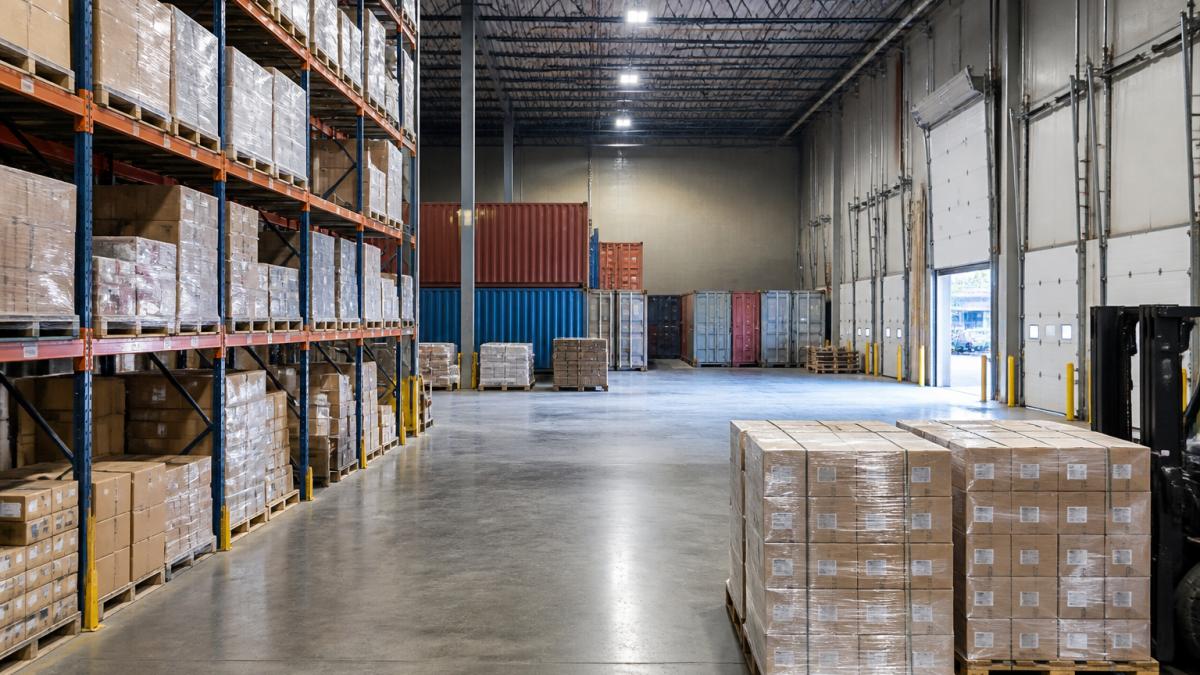
Once stored, you have options: release goods into the domestic market by paying duties and taxes, re-export them to avoid duties entirely, move them between bonded facilities, or perform permitted activities like labeling, repackaging, or light assembly while goods remain under bond.
The CBSA's Memorandum D7-4-4 sets the regulatory framework, defining allowed activities, storage duration, and required documentation (Memorandum D7-4-4: Customs Bonded Warehouses). The operator acts as custodian, responsible for security, inventory accuracy, and ensuring goods don't leave without proper authorization.
Key Financial Benefits: Duty and Tax Deferral
The primary financial benefit of bonded warehousing is deferred duties and taxes.
Bonded storage affects three cost layers:
- Duty deferral. Customs duties are not paid at arrival; they are paid at release. The deferral period equals your storage duration.
- Tax deferral. Federal excise taxes and, in many cases, the federal portion of sales tax on imported goods are deferred (Foreign Trade Zone). Provincial sales tax treatment varies by province and by goods, so the deferral is not uniform across the country.
- Carrying cost avoidance. Every dollar not paid at arrival is a dollar that stays in your operating account. The value of that deferral is the carrying cost you avoid, typically measured against your cost of capital or your line-of-credit rate.
Compare two identical import scenarios. In a standard warehouse, you pay duties at arrival. In a bonded warehouse, you pay $0 at arrival and duties at release. If your inventory turns in 60 days, you've had use of that capital for two months.
For a business importing ten such containers annually with staggered arrivals, the aggregate deferral is a meaningful working-capital buffer.
There's also a pricing-strategy benefit: you aren't forced to mark up goods to recover duties paid upfront. You can hold inventory, monitor market conditions, and price competitively without the pressure of sunk duty costs. For seasonal importers, holiday goods, agricultural equipment, promotional inventory, this can mean the difference between full-margin clearance and discounting to recover cash.
One trade-off: bonded storage isn't free. Operators charge storage and handling fees that can offset the deferral benefit if goods sit too long. The break-even point depends on your duty rate relative to the storage rate. Run that comparison before committing.
Some provincial taxes may not be deferred depending on the goods and province. Provincial variations are easy to miss and can change your tax position at release, so confirm your specific duty and tax position before goods arrive.
CBSA Bonded Warehouse Requirements and Eligibility
Not all goods qualify for bonded storage. Understanding eligibility is critical before committing.
Eligible goods include most imported merchandise: apparel, electronics, machinery, raw materials, finished products. Ineligible goods include certain controlled items, restricted hazardous materials, and goods prohibited under trade agreements or domestic regulations. Alcohol and tobacco have separate rules and higher compliance requirements.
Bonded warehouse operators must be licensed by CBSA, proving financial stability, adequate security, proper record-keeping, and trained staff. The operator posts a security bond guaranteeing goods will be properly managed and duties paid if released.
Importers don't need a special license, but must work through a licensed operator. GTC Logistics holds the CBSA license, maintains the security bond, and manages the regulatory relationship. You provide goods and release instructions; we handle compliance.
Eligibility also depends on origin: goods from countries with trade agreements may have different duty rates or restrictions, and goods subject to quotas or trade-remedy tariffs carry additional considerations. A provider experienced in CBSA bonded warehousing can confirm whether your goods qualify and what your duty position will be.
Bonded Warehouse vs. Sufferance Warehouse: Key Differences
Two types of customs-controlled storage exist in Canada: bonded warehouses and sufferance warehouses. The distinction affects your costs, flexibility, and what you can do with goods while stored.
A bonded warehouse is a CBSA-licensed facility authorized for long-term duty-deferred storage. The operator holds a formal license, posts a security bond, and operates under strict CBSA oversight.
A sufferance warehouse is a temporary holding facility, often at a port or airport, for goods in transit or awaiting clearance. These are short-term, days or weeks, not months, less formal, and often run by customs brokers or freight forwarders.
The practical difference: bonded warehouses suit importers holding inventory strategically and deferring duties long-term; sufferance warehouses suit goods in transit needing temporary holding. If you're storing containers for weeks or months before selling, you need bonded storage.
GTC Logistics operates a bonded warehouse, so we can accommodate your long-term inventory strategy and help you optimize release timing.
Storage Time Limits and Compliance
Goods in a CBSA bonded warehouse can generally remain up to five years before they must be released, re-exported, or destroyed, substantial flexibility for slow-moving or strategic inventory.
Compliance within that window is non-negotiable. The operator and, by extension, you as importer must maintain accurate records of every item. CBSA can inspect and audit at any time; discrepancies, missing goods, incorrect counts, or unauthorized movements trigger penalties for both operator and importer.
Record-keeping includes inventory logs, goods receipt documentation, movement records, and release declarations. GTC Logistics uses Oracle NetSuite for real-time inventory visibility, so you can see exactly what's in storage and when it entered, with CBSA-compliant records maintained automatically.
Time limits also matter for re-export: goods must ship back out while under bond. Once released domestically, re-export requires different procedures and may trigger duties. Plan your storage timeline and release strategy upfront.
Choosing the Right Bonded Warehouse Partner
Selecting a bonded warehouse provider is not just about finding available space. Your provider manages your regulatory compliance, inventory security, and the timing of goods release, all critical to your supply chain and bottom line. Most importers evaluate providers on price alone and discover the gaps later. A more useful approach is to score providers against measurable criteria and to probe the risks that rarely appear in a sales brochure.
Evaluate these criteria:
- CBSA licensing and compliance history. Verify the operator holds an active CBSA bonded warehouse licence and confirm there are no licence restrictions or unresolved compliance findings. Ask directly how they handle a CBSA audit and what their last audit outcome was.
- Inventory management systems. Your provider should offer real-time visibility into what is stored, when it arrived, and its status. Look for system integration, the ability to feed inventory data into your own ERP or marketplace tools, rather than a portal you have to check manually.
- Customs expertise. The operator should understand bonded warehouse regulations, goods release procedures, and provincial tax implications. Ask them to walk through a release scenario for your specific goods, including which documents are filed and by whom.
- Security and facility standards. Physical security matters, controlled access, surveillance, locked caging for high-value goods, but so does data security for your inventory records. Ask how access is logged and who can authorize a goods movement.
- Service scope. Does the provider offer just storage, or do they handle destuffing, cross-docking, labeling, and preparation for final sale or shipment? A provider that can receive containers, store under bond, and prepare goods for final distribution reduces the number of handoffs where errors occur.
- Scalability and capacity. Can the provider grow with you? Ask about dock door count, square footage, and whether they have overflow arrangements. A facility that forces you to relocate mid-season is a supply-chain risk.
- Communication and support. You should have direct access to your account team and clear documentation of all transactions. Opacity leads to surprises at release.
Beyond the checklist, ask about the operational risks that determine whether a provider is truly reliable:
- Inventory discrepancies. How are cycle counts performed, how often, and what is the reconciliation process when a count does not match? A provider that cannot describe this process in detail is a compliance risk.
- Damage and expiry. For goods with shelf life or fragile handling requirements, ask how the provider segregates, rotates, and reports damaged or expired stock.
- Security incidents. Ask how the provider responds to a suspected loss, who is notified, and how CBSA is engaged. The answer reveals whether they have a real incident-response process or are improvising.
- Compliance failures. Ask what happens if a release declaration is filed incorrectly. Who bears the penalty, and how is it resolved? The bonded warehouse operator is the custodian, but the importer can share exposure.
Finally, ask how the provider is preparing for current CBSA compliance changes, including the transition to the CBSA Assessment and Revenue Management (CARM) system and any licensing or reporting updates that affect bonded warehouse operators. CARM changes how duties and taxes are assessed and paid, and it affects the timing of release transactions. A provider that is already aligned with CARM will make your transition smoother; one that is not will pass the disruption on to you.
Ask prospective providers for references from importers similar to your business. Ask about their process for goods release, how they handle CBSA inspections, and what happens if you need to pivot your inventory strategy. A provider confident in their operations will answer directly.
Frequently Asked Questions
What are the main benefits of using CBSA bonded warehousing?
CBSA bonded warehousing defers customs duties and certain taxes until goods are released into the domestic market, improving cash flow for importers. The service also allows businesses to store imported goods securely under customs control, perform value-added activities like labeling or repackaging, and manage inventory strategically without paying duties upfront. This is particularly valuable for seasonal businesses, companies managing large container shipments, or retailers testing new products before committing to full import duties.
How long can goods stay in a CBSA bonded warehouse?
Goods can remain in a CBSA bonded warehouse for up to five years from the date of importation. The specific time limit depends on the type of goods and the warehouse license conditions. Businesses planning longer-term storage should confirm the exact requirements with their bonded warehouse operator and review CBSA Memorandum D7-4-4 for any restrictions on their product category.
What is the difference between a bonded warehouse and a sufferance warehouse?
A bonded warehouse is a licensed facility where imported goods can be stored under customs control with duties and taxes deferred. A sufferance warehouse is a temporary holding facility, often at a port or airport, for goods in transit or awaiting clearance. Goods must remain untouched, and duties and taxes aren't deferred the same way. Bonded warehouses offer significant financial advantages and stricter compliance oversight, making them the preferred choice for businesses managing regular imports. Sufferance warehouses are typically used only for short-term emergency storage.
What types of goods can be stored in a CBSA bonded warehouse?
Most imported goods can be stored in a CBSA bonded warehouse, including textiles, electronics, machinery, consumer products, and raw materials. However, certain restricted items such as hazardous materials, food products subject to specific regulations, and goods covered by import quotas may have limitations. Businesses should verify eligibility with their bonded warehouse operator or consult CBSA guidance to confirm their specific product category qualifies for bonded storage.


