



Table of Contents
- What Container Destuffing Services Actually Do
- Cross-Docking Services for Small Businesses
- CBSA Bonded Warehouse Services for Import Compliance
- Amazon FBA Preparation Services and Container Destuffing
- Container Destuffing vs. Cross-Docking: Key Differences
- Cost-Benefit Analysis: Outsourcing vs. In-House Destuffing
- Safety, Compliance, and Handling Specialized Cargo
- Frequently Asked Questions
Last Updated: October 2, 2026
What Container Destuffing Services Actually Do
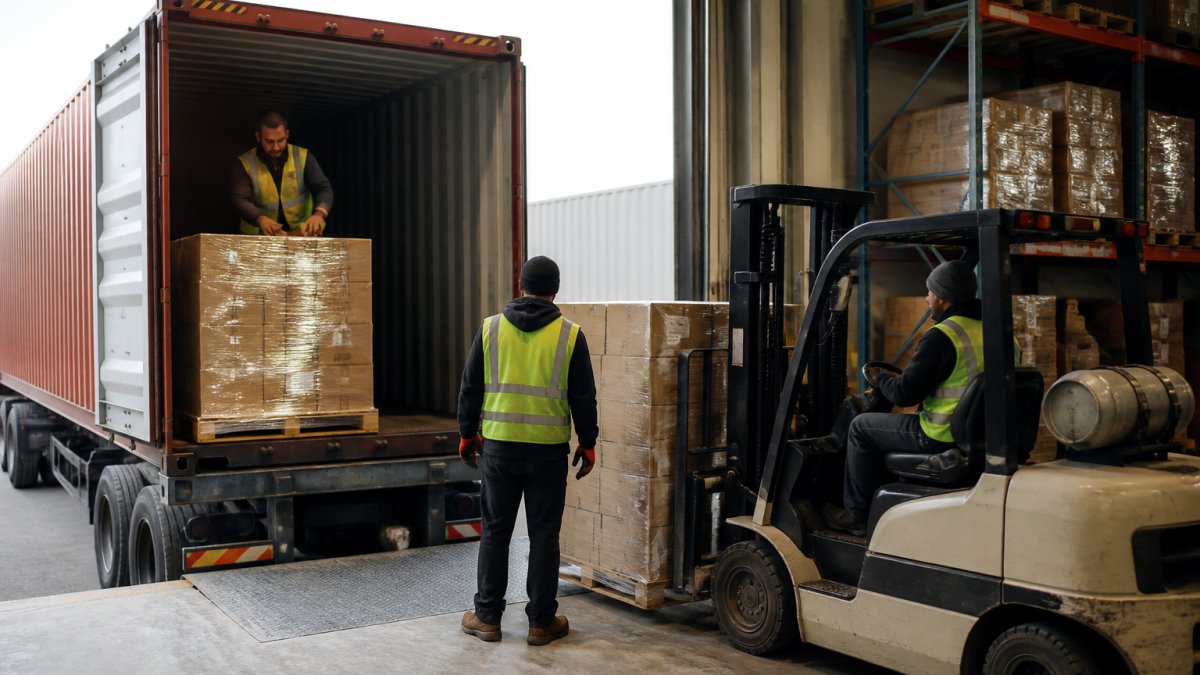
Container destuffing services handle the critical task of unloading freight from shipping containers and preparing goods for the next stage of distribution. When a container arrives at a warehouse or distribution center, destuffing involves systematically removing items, inspecting them for damage, and organizing them for storage, cross-docking, or immediate shipment.
A typical container holds 45,000 to 65,000 pounds of cargo. Unloading, organizing, and reconciling that inventory manually requires coordinating labor, managing dock space, tracking inventory in real time, and minimizing loss or damage, all sources of operational risk.
GTC Logistics handles container destuffing services with a 30,000 square foot facility featuring five dock doors for simultaneous processing. We verify contents, sort by destination, palletize where needed, and feed data directly into your inventory system via Oracle NetSuite integration.
Professional container destuffing services provide instant visibility into what arrived, where it's stored, and when it moves next, critical for e-commerce brands scaling to Amazon FBA and import companies managing CBSA compliance.
Cross-Docking Services for Small Businesses
Cross-docking moves goods directly from inbound to outbound within hours, eliminating storage costs while maintaining supply chain flexibility, ideal for small businesses managing tight cash flow.
Containers arrive, goods are destuffed and sorted by destination, then loaded onto outbound trucks or consolidated with other shipments. This consolidation reduces transportation costs by filling trucks more efficiently.
Cross-docking removes the capital requirement of maintaining inventory. You need dock capacity proportional to throughput, not warehouse space proportional to sales volume. GTC Logistics operates until 9:00 PM, allowing evening container receipt and next-morning outbound shipment.
Cross-docking demands precise inbound-outbound coordination. Delayed outbound shipments create unplanned storage problems. Oracle NetSuite synchronization automatically matches inbound goods to outbound orders, reducing manual coordination and error.
CBSA Bonded Warehouse Services for Import Compliance
CBSA bonded warehouse services allow imported goods to be stored without immediately paying duties and taxes, the most cost-efficient compliance path for businesses importing containers from Asia or Europe.
Goods enter a CBSA-licensed bonded warehouse under customs supervision. You pay duties only when goods are released for sale or distribution, not upon import, critical for cash flow on a $100,000 container.
CBSA requires detailed record-keeping: manifests, item-level tracking, duty calculations, and release documentation. A single error—misdeclared items, missing forms, incorrect tariff codes—can trigger audits, holds, or penalties exceeding $12,000.
GTC Logistics operates a CBSA bonded warehouse, handling compliance: record maintenance, CBSA coordination, and release processing. Oracle NetSuite integration tracks inventory in real time while goods remain under customs supervision.
Bonded warehousing buys time to assess market conditions and release goods when demand is strongest, valuable for seasonal businesses and brands managing inventory cycles.
Amazon FBA Preparation Services and Container Destuffing
Amazon FBA preparation transforms raw container freight into FBA-compliant shipments. Amazon's specific labeling, packaging, and documentation requirements mean non-compliant goods face fulfillment center rejection.
The preparation process includes several steps: destuffing the container, inspecting items for damage or defects, applying Amazon barcode labels, packing items into FBA-compliant cases, and generating the shipment documentation. Each step has to be executed correctly. A single mislabeled case can cause Amazon to quarantine your entire shipment pending manual review.
Most e-commerce brands outsource FBA prep because the labor cost of doing it in-house can be significant. Beyond labor, there's the space requirement; you need a staging area, labeling equipment, and quality control processes.
GTC Logistics handles end-to-end FBA preparation as part of our fulfillment offering. We receive your container, destuff it, inspect items, apply Amazon labels, pack cases, and arrange shipment to your assigned Amazon fulfillment center. The entire process is tracked in Oracle NetSuite, so you have visibility into every step. You can monitor when items arrive, when prep begins, when cases are packed, and when they ship to Amazon.
The operational advantage is that we consolidate multiple services into a single workflow. You're not coordinating with separate destuffing, labeling, and logistics providers. One facility, one invoice, one point of accountability. This reduces coordination overhead and accelerates time-to-market for your products.
Container Destuffing vs. Cross-Docking: Key Differences
The distinction between container destuffing and cross-docking is often misunderstood, but it matters operationally. Container destuffing is the unloading and organization of inbound freight. Cross-docking is the consolidation and routing of that freight to outbound destinations.
Destuffing is a prerequisite step. Every cross-docking operation begins with destuffing; you can't consolidate freight you haven't unloaded. But destuffing alone doesn't define cross-docking. You can destuff a container and store the goods for days or weeks. Cross-docking destuffs and immediately routes to outbound, with minimal dwell time.
The operational implications are significant. Destuffing requires dock space and labor for a defined period. Cross-docking requires dock space, labor, and precise outbound coordination. If your outbound shipments are delayed, cross-docking becomes expensive; you've consumed dock resources without moving goods forward.
For inventory management, destuffing enables storage and later distribution. Cross-docking eliminates storage but requires outbound logistics to be locked in before inbound arrives. Most businesses use a hybrid approach: destuff everything, cross-dock what has immediate outbound demand, and store the remainder for later release.
GTC Logistics offers both services independently or integrated. If you need flexibility, destuff today, decide tomorrow where goods go, we provide that. If you have predictable outbound demand and want to minimize storage costs, we cross-dock. The choice depends on your supply chain predictability and cash flow constraints.
Cost-Benefit Analysis: Outsourcing vs. In-House Destuffing
The decision to outsource container destuffing hinges on three factors: labor cost, facility cost, and operational complexity. Many businesses assume outsourcing is always more expensive, but the math often tells a different story.
In-house destuffing requires dedicated labor. A single container takes 4-6 hours to unload, sort, and organize. If you're processing containers irregularly, say, four times per year, you're paying for idle labor capacity most of the time. If you're processing containers regularly, weekly or bi-weekly, you need permanent staff, which introduces payroll overhead, benefits, training, and turnover risk.
In-house destuffing also requires facility space. You need dock doors, staging area, storage racks, and material handling equipment. A 30,000 square foot facility costs money to lease, heat, and maintain. For small businesses, that overhead is often unjustifiable relative to their volume.
Outsourcing transfers both labor and facility costs to the service provider. You pay per container or per unit handled, not for idle capacity. The tradeoff is loss of direct control. If destuffing quality matters critically to your operation, outsourcing introduces a dependency on a third party's standards.
The hidden cost of in-house destuffing is coordination complexity. You're managing dock scheduling, labor availability, inventory tracking, and outbound logistics all internally. Mistakes happen, items get mislabeled, quantities are miscounted, shipments are delayed. Each mistake cascades through your supply chain, affecting downstream fulfillment and customer satisfaction.
For many small to mid-market businesses, outsourcing container destuffing can be more cost-effective than in-house operations.
Safety, Compliance, and Handling Specialized Cargo
Container destuffing involves physical labor and safety risks that are often underestimated. Workers are handling heavy items, operating material handling equipment, and working in confined spaces. WHMIS (Workplace Hazardous Materials Information System) compliance is mandatory when handling goods that include hazardous materials.
Professional destuffing services operate under formal safety protocols. This means proper training, equipment inspection, incident reporting, and compliance documentation. If a worker is injured during in-house destuffing, you're liable for workers' compensation, potential regulatory fines, and operational disruption. Professional services carry their own liability insurance and safety certifications.
Specialized cargo, hazardous materials, temperature-controlled goods, fragile items, requires additional handling protocols. Flammable materials need separate storage. Perishables need temperature control. Fragile goods need cushioning and careful handling. Mishandling specialized cargo isn't just an operational failure; it's a regulatory violation that can result in fines or shipment seizure.
CBSA also enforces import safety standards. Certain goods require inspection or certification before release from bonded warehousing. If you're importing food products, pharmaceuticals, or regulated equipment, CBSA may require third-party verification. Professional destuffing services understand these requirements and coordinate with regulators.
GTC Logistics maintains CBSA bonded warehouse certification, which means we operate under regulatory oversight. Our facility meets safety standards, our staff is trained in hazmat handling, and our processes are documented and auditable. When you outsource destuffing to a certified provider, you're transferring regulatory risk to an entity equipped to manage it.
The decision to use professional container destuffing services isn't just about cost savings; it's about operational resilience.
Frequently Asked Questions
What does container destuffing mean in logistics?
Container destuffing is the process of unloading freight from a shipping container (e.g., 20ft or 40ft) at a warehouse or distribution facility. The cargo is then sorted, organized, and prepared for storage, cross-docking, or immediate distribution. Destuffing separates consolidated shipments into individual orders or smaller lots, making it essential for e-commerce fulfillment and supply chain operations. Many businesses outsource this service to specialized providers rather than managing it in-house.
How does container destuffing improve warehouse efficiency?
Destuffing services simplify inbound operations by removing the burden of unloading and sorting from your internal team. Professional destuffing reduces handling time, minimizes cargo damage, and enables faster inventory turnover. When paired with real-time inventory tracking systems, destuffing accelerates the movement of goods from port to warehouse to customer. This reduces bottlenecks, frees up dock space, and allows your team to focus on higher-value fulfillment tasks rather than manual unloading.
What is the difference between cross-docking and container destuffing?
Container destuffing is the act of unloading freight from a container. Cross-docking is a broader logistics strategy where goods are unloaded, sorted, and immediately reloaded onto outbound trucks for final delivery without extended storage. Destuffing is a single operation; cross-docking is a workflow that often includes destuffing as its first step. Many providers offer both services together to create seamless, fast-moving supply chains that reduce storage costs and accelerate delivery.
Why should businesses outsource container unloading services?
Outsourcing destuffing eliminates capital investment in equipment, facility space, and labor. Professional providers have specialized dock equipment, trained staff, and systems to handle high volumes safely and quickly. They manage compliance documentation, reduce cargo damage, and integrate with your inventory system for real-time visibility. For growing e-commerce brands and importers, outsourcing destuffing allows you to scale operations without building your own warehouse infrastructure, making it a cost-efficient path to growth.
CBSA Bonded Warehouse Regulations
Workplace Hazardous Materials Information System (WHMIS) Guidelines
Amazon FBA Preparation Requirements and Standards


